
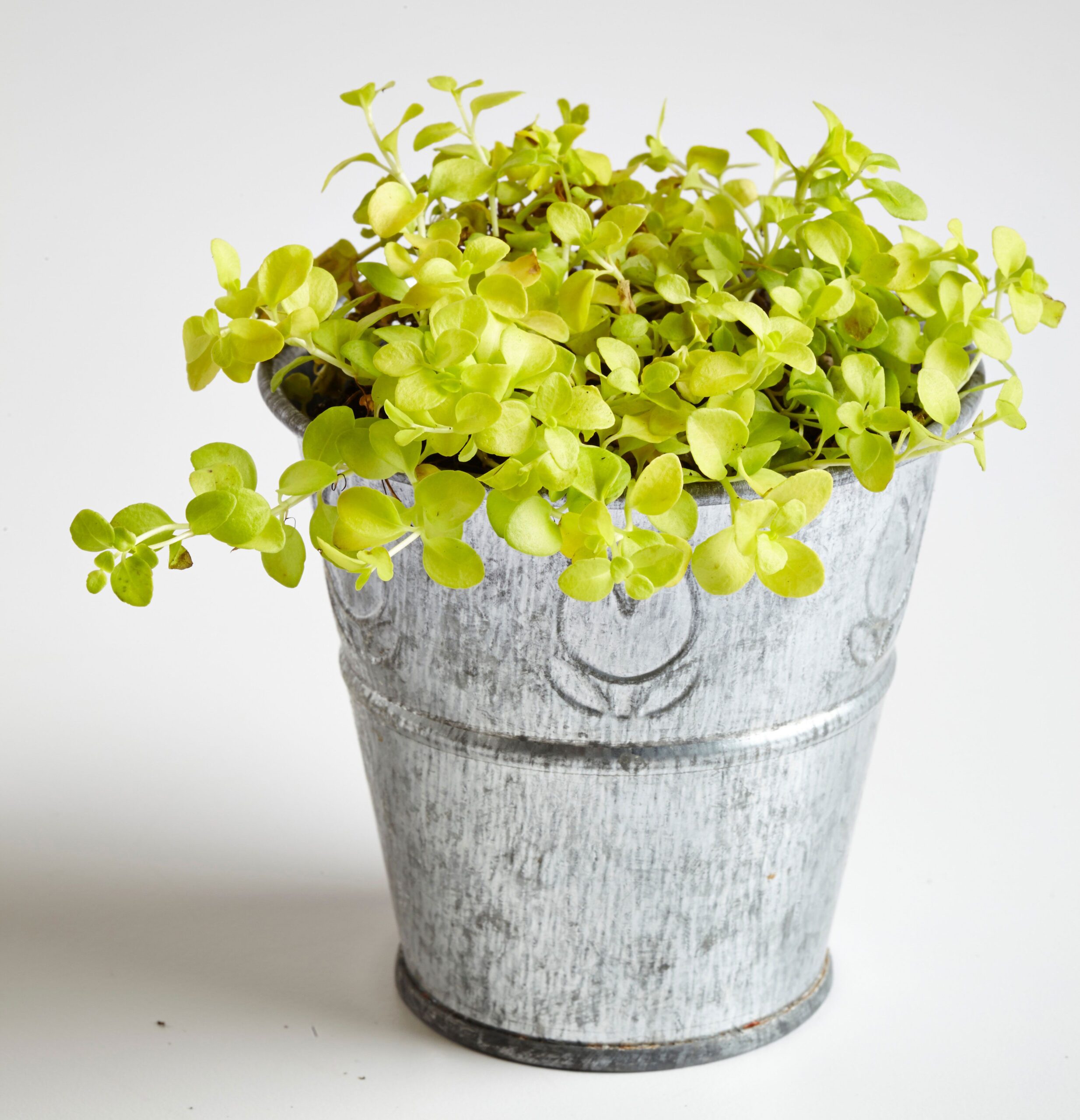
Fairy gardens are postage-stamp plots that require the most petite of plantings. But these whimsical little landscapes offer so much more than small-scale greenery. They add a touch of magic with their miniature structures and fairy figurines. Whether you’re planting your tiny garden in an indoor container or tucking it into an outdoor nook, let these fairy garden plants spark your imagination as you plan your layout.
Baby Tears
Jason Donnelly
Baby tears (Soleirolia soleirolii) has little bitty leaves on thin, low-growing stems that form a fine-textured, moss-like groundcover. It’s hardy in USDA Zones 9-11, but can become weedy in ideal conditions. Or, grow it indoors in a terrarium or pot. Baby tears prefers consistently moist soil and indirect light.
Spike Moss
Sometimes called club moss, spike moss (Selaginella kraussiana) is a low-growing plant with lacy, fern-like leaves. It requires bright but indirect light, consistently moist soil, and thrives in humid environments like terrariums. Spike moss grows very slowly, but once mature, it can create a dense carpet of green foliage.
Miniature Fig Tree
Jason Donnelly
Some varieties of fig trees stay under a foot tall. For example, ‘Tiny Limey’ is a dwarf Ficus microcarpa (shown here). Or look for a dwarf weeping fig such as Ficus benjamina ‘Mini’. These miniature trees work equally well for bonsai or fairy gardens. Most types of Ficus prefer well-drained soil that’s kept on the moist side.
Polka-Dot Plant
Jason Donnelly
Available in pink, red, or white, polka-dot plant (Hypoestes phyllostachya) is a favorite for fairy gardens because of its petite size and its striking leaves. It’s most commonly grown as a houseplant but also makes a colorful tropical annual in the garden. This tropical plant does best with high humidity, plenty of moisture, and bright but indirect light.
Gray Lavender Cotton
Jason Donnelly
Gray lavender cotton (Santolina chamaecyparissus) is a Mediterranean herb with aromatic grayish green foliage. It can withstand regular trimming and shaping, making it a good candidate for a fairy garden. Once it’s established, this perennial is very drought-tolerant, and it’s hardy in Zones 6-9. It grows up to 2 feet tall and requires full sun.
Mexican Heather
Jason Donnelly
Mexican heather (Cuphea hyssopifolia) is a pretty shrub with small leaves and tiny but colorful flowers. It grows up to 18 inches tall but can be kept smaller with pruning, and it can even be shaped into a topiary. Regular water and part sun will keep the Mexican heather blooming all summer long. Since it’s heat-tolerant, it’s a good candidate for an outdoor fairy garden.
Golden Japanese Stonecrop
Jason Donnelly
Low-growing golden Japanese stonecrop (Sedum makinoi ‘Ogon’) can create a carpet-like covering among your other miniature garden plants. It does best in morning or evening sun, but hot midday sun will stress it. This stonecrop needs good drainage, and can withstand drought and hot weather. It’s hardy in Zones 7-9.
Wood Sorrel
Jason Donnelly
Also called false shamrock, ornamental types of wood sorrel (Oxalis triangularis) feature pink and purple leaves and pink or white flowers in spring and summer. The plant reaches about 6 inches tall, forming a tiny mound of leaves that fold up at night. Though it’s hardy down to Zone 7, wood sorrel is usually treated as an annual, or grown as a houseplant.
Fuchsia Begonia
Jason Donnelly
Fuchsia begonia (Begonia foliosa var. miniata) gets its name from its clusters of dangling pink or red flowers that look similar to a fuchsia. It can grow up to 3 feet tall but can be kept smaller with regular pinching. Allow it to dry a bit between waterings, and give it morning sun, while shielding it from afternoon rays.
Elfin Thyme
Jason Donnelly
Elfin or creeping thyme (Thymus serpyllum) forms a very low mat of ultra-tiny green leaves, then bursts forth with deep-pink blossoms in late spring. It requires regular watering in well-drained soil and fares best outdoors in Zones 4-9.
Variegated Artillery Plant
Jason Donnelly
Perfect for humid terrariums or indoor fairy gardens, variegated artillery plant (Pilea microphylla) has tiny green and white leaves on almost succulent stems. The plant can grow up to a foot tall so may need occasional pinching back to stay compact. Look for the plain green-leafed version, too.
Dwarf Umbrella Plant
Jason Donnelly
Dwarf umbrella tree (Schefflera ais a smaller type of Schefflera that gets about 3-4 feet tall. It can be pruned to keep it shorter. Water thoroughly only after the soil becomes very dry, and give it bright but indirect light indoors.
Miniature Oakleaf Fig
Jason Donnelly
Thriving in indirect light and high humidity, miniature oakleaf fig (Ficus pumila ‘Oakleaf’) makes a good choice for terrarium fairy gardens or moist dish gardens. The foliage resembles teeny tiny oak leaves, and the trailing stems will form a dense green mat as it grows. Allow the soil to dry slightly between waterings.
Coleus
Jason Donnelly
Upright varieties of coleus with small leaves make a bright focal point in miniature gardens. Some can be trained to a single stem by removing side foliage if you’d like to achieve a tree-like look on a small scale. Grow coleus indoors or out in the garden as an annual.
Ripple Peperomia
Jason Donnelly
Available in burgundy or green, ripple peperomia (Peperomia caperata) makes a striking addition to a terrarium fairy garden, thanks to its crinkled, heart-shaped leaves. The plant forms a tidy mound about 6 inches tall. It prefers consistently moist but well-drained soil and bright, indirect light.
Bugleweed
Jason Donnelly
A popular perennial groundcover plant, bugleweed (Ajuga reptans) comes in an array of sizes and leaf colors. The colors often look their best in part shade locations. In some climates, this plant can spread aggressively, so keep it in a container or a garden bed where you can keep it in bounds. Bugleweed is hardy in Zones 3-9, going dormant in winter and returning in spring.
Golden Monterey Cypress
Jason Donnelly
Soft to the touch, golden Monterey cypress (Hesperocyparis macrocarpa ‘Goldcrest Wilma’) is also called dwarf lemon cypress. This conical evergreen tree tops out around 6 feet tall. It needs full sun to achieve its brightest chartreuse color, which it keeps year-round. This tree is hardy in Zones 7-9; in colder regions, grow it indoors as a houseplant.
Dwarf Ixora
Jason Donnelly
Slow-growing dwarf ixora (Ixora coccinea) is a small evergreen shrub with a naturally rounded shape that reaches 2-3 feet tall. It grows well as a houseplant in as much bright light as you can give it. The more light, the more it will bloom, as long as you make sure to regularly water it.
Golden Creeping Speedwell
Jason Donnelly
Mostly grown for its nearly flat carpet of small chartreuse leaves, golden creeping speedwell (Veronica repens ‘Sunshine’) also produces tiny light blue flowers in spring. It grows best in part shade, but will tolerate full sun outdoors if watered frequently. It’s hardy in Zones 4-8.
Asparagus Fern
Jason Donnelly
Not actually a fern, asparagus fern (Asparagus plumosus) is actually related to edible asparagus. Grow this plant indoors in bright but indirect light and consistently moist but well-drained soil. It grows about a 18 inches tall.
Dwarf Arrowhead Plant
Jason Donnelly
This dwarf version of the popular arrowhead houseplant (Syngonium podophyllum) makes a good choice for terrariums because it grows only 4-6 inches tall. The pale pink veins on its arrow-shaped leaves bring a subtle touch of color.