
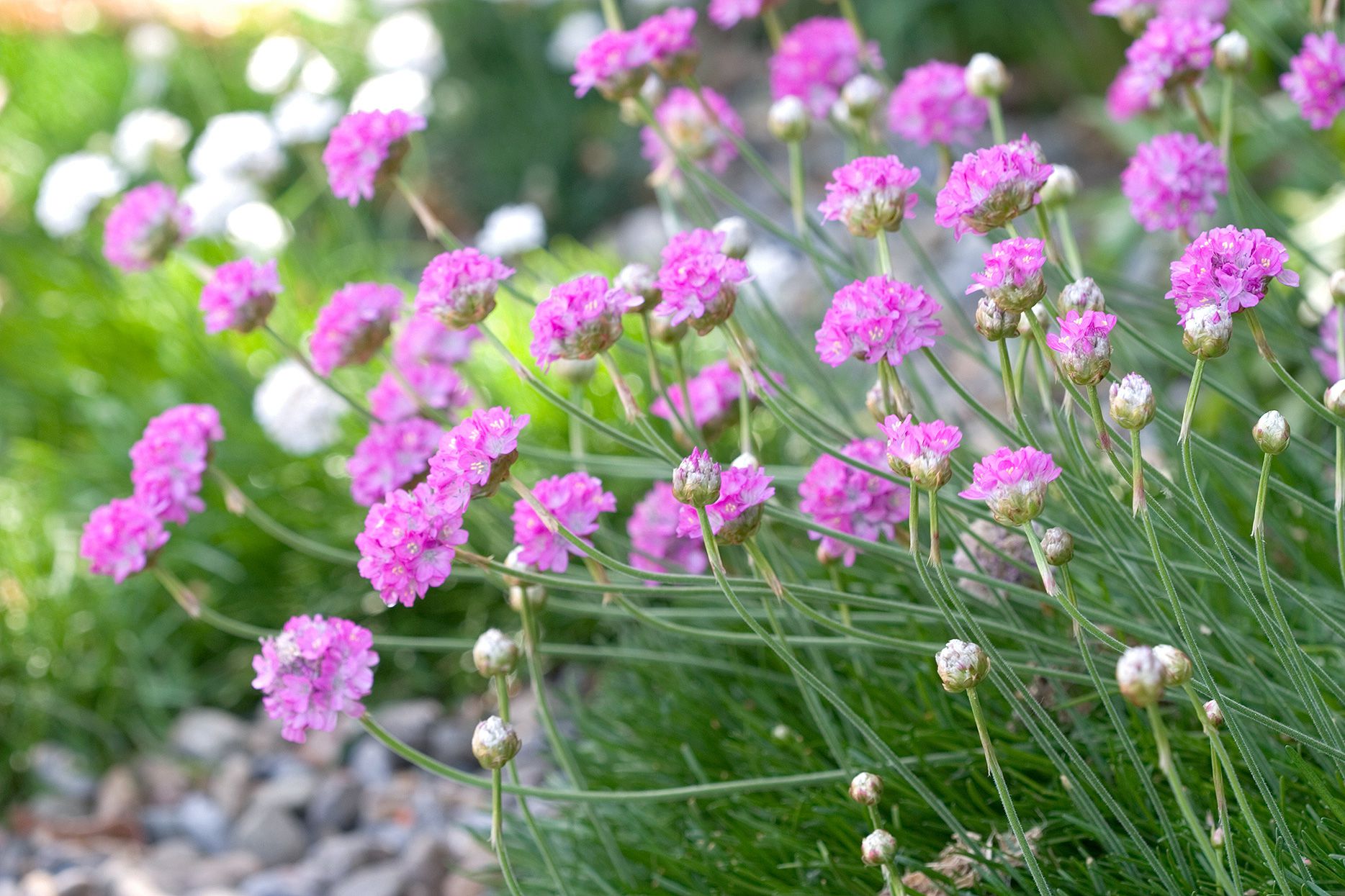
Depending on the shade you choose, pink flowers can add a bold or delicate touch to the garden. Use light pink flowers for an airy feel or bright pink flowers that pop against a green background to make a bold statement. Browse our favorite pink flowering plants—from climbers to hedges—to add blush, rose, magenta, and other eye-catching pink hues to your garden.
Rose Thrift
Perfect for your rock garden or along the edge of a bed or border, rose thrift adds a punch of pink flowers atop a grassy mound of foliage. The delicate foliage and small flowers are also a great addition to a fairy garden.
Name: Armeria maritima ‘Rosea’
Growing Conditions: Full sun to part shade and well-drained soil
Size: 6-8 inches tall and wide
Zones: 3-9
‘Alice du Pont’ Mandevilla
Soften your pergola or trellis with mandevilla, a heat-loving tropical vine that offers charming pink flowers all summer. These flowering vines are low-maintenance and fast-growing. They are usually grown as annual plants in colder climates.
Name: ‘Alice du Pont’ mandevilla
Growing Conditions: Full sun and well-drained soil
Size: Climbs up to 20 feet tall
Zones: 10-11
Train young flowering vines early by gently tying or weaving them onto the trellis using soft ties or garden twine to guide their growth vertically.
‘Ann Folkard’ Geranium
A great companion for coralbells and lungwort, ‘Ann Folkard’ geranium weaves its chartreuse foliage through other flowers. This particular cultivar blooms in magenta pink flowers.
Name: Geranium ‘Ann Folkard’
Growing Conditions: Full sun to part shade and well-drained soil
Size: 12-24 inches tall, 24-30 inches wide
Zones: 5-9
‘Catherine Woodbury’ Daylily
Add fragrance and beauty to your garden with a no-fuss, pink-blooming ‘Catherine Woodbury’ daylily. One of the easiest perennials you can grow, it’s sure to be a garden showstopper in the early to midsummer months.
Name: Hemerocallis ‘Catherine Woodbury’
Growing Conditions: Full sun to part shade and well-drained soil
Size: 3 feet tall
Zones: 3-9
‘Raspberry Wine’ Bee Balm
Attract butterflies and hummingbirds with bee balm’s sweet fragrance. The ‘Raspberry Wine’ cultivar is disease-resistant and offers beautiful rose-red flowers.
Name: Monarda ‘Raspberry Wine’
Growing Conditions: Full sun to part shade and well-drained soil
Size: 30 inches tall
Zones: 3-9
To keep the plant sustainable, buy bee balm seedlings from reputable nurseries to avoid harming wild populations.
‘Giles Van Hees’ Veronica
Ideal for small gardens, ‘Giles Van Hees’ is a compact Veronica that’s resistant to deer. This variety attracts hummingbirds and butterflies with its bright pink flowers.
Name: Veronica ‘Giles Van Hees’
Growing Conditions: Full sun to part shade and well-drained soil
Size: 6 inches tall
Zones: 4-9
‘Appleblossom’ Yarrow
‘Appleblossom’ yarrow is a garden favorite. Its soft pink flowers float above feathery, gray-green leaves. This yarrow variety is a great addition to a cottage garden and is perfect for cutting and drying.
Name: Achillea ‘Appleblossom’
Growing Conditions: Full sun and well-drained soil
Size: 24 inches tall
Zones: 3-9
Hollyhock
Hollyhocks have been garden favorites for generations. What’s not to love about their towering spikes of hibiscus-shaped flowers? The pink-flowering types are particularly fun in the garden as they blend well with everything.
Name: Alcea rosea
Growing Conditions: Full sun and well-drained soil
Size: 3-8 feet tall and 1-3 feet wide
Zones: 3-8
Start hollyhocks from nursery pots, spacing them 12–18 inches apart. Overall, leave 3–4 feet of garden space for future spread as they reseed and fill in over time.
‘Party Dress’ Anemone
A striking addition to the garden, ‘Party Dress’ anemone pushes out big double pink flowers in autumn—a time when most gardens could use an extra shot of color. They’re also excellent cut flowers for a bouquet.
Name: Anemone ‘Party Dress’
Growing Conditions: Full sun to part shade and well-drained soil
Size: 36 inches tall and wide
Zones: 4-8
‘Pumila’ Astilbe
A compact astilbe variety perfect for small spaces, ‘Pumila’ also offers great pink flower power. The fragrant blooms make it a garden superstar, and it’s deer-resistant.
Name: Astilbe ‘Pumila’
Growing Conditions: Part sun to shade and well-drained soil
Size: 12 inches tall
Zones: 4-8
Fuchsia
Generally planted as an annual, fuchsias add a touch of elegance to your garden with their draping, lantern-like flowers. There are lots of varieties to choose from in shades of pink, ranging from very deep (almost radish-red) to soft blush. Plant fuchsia in hanging basketsor containers to give your garden an extra pop of color.
Name: Fuchsia selections
Growing Conditions: Full sun to shade and well-drained soil
Size: 24-30 inches tall and wide
Zones: 8-10
‘Carefree Beauty’ Rose
This disease-resistant shrub rose offers fragrant semidouble pink flowers all summer and fall. Try planting it alongside burgundy foliage such as ‘Diablo’ ninebark or ‘Velvet Cloak’ smokebush.
Name: ‘Carefree Beauty’ Rosa
Growing Conditions: Full sun and moist, well-drained soil
Size: 4 feet tall and wide
Zones: 4-9
Allium
The perfect plant to celebrate spring in the rock garden, Allium oreophilum grows low and produces pretty pink flowers. The whimsical, round blooms of allium are a great way to add height and unexpected color to the back of a flower bed.
Name: Allium oreophilum
Growing Conditions: Full sun to part shade and well-drained soil
Size: 4 inches tall
Zones: 4-7
Plant allium bulbs in fall after the first chill. They need a cold period to develop strong roots and prepare for spring growth.
Rose of Sharon ‘Sugar Tip’
Rose of Sharon brings tropical flair to the garden with its continuous supply of pink flowers. This standout hibiscus selection also offers variegated foliage. Use it as a focal point in the garden or as a privacy hedge.
Name: Hibiscus syriacus ‘Sugar Tip’
Growing Conditions: Full sun to part shade and well-drained soil
Size: 6-10 feet tall, 6 feet wide
Zones: 5-8
Peony
Few flowers are as opulent as a blowsy pink peony. This carefree plant blooms in late spring and comes in an array of colors—although pink is a classic. Most varieties bear a delightful fragrance—typically of sweet rose or spicy citrus. They make excellent cut flowers or you can use the dried flowers for crafts.
Name: Paeonia selections
Growing Conditions: Full sun and moist, well-drained soil
Size: 4 feet tall and wide
Zones: 3-8
‘Angelique’ Tulip
Among the most beautiful of all tulips, ‘Angelique’ bears dainty flowers with double blooms in a delightful shade of soft pink. It’s also long-lived and able to bloom for several years in the right conditions. Plant ‘Angelique’ with white daffodils for a wonderful spring treat.
Name: Tulipa ‘Angelique’
Growing Conditions: Full sun and well-drained soil
Size: Up to 15 inches tall and 6 inches wide
Zones: 3-8
Foxglove
Foxgloves are majestic, low-care plants for the woodland garden. Most common varieties are biennials, meaning they grow foliage one year, bloom the next, and then die. If you leave them to drop seed, new crops spring up on their own every year.
Name: Digitalis selections
Growing Conditions: Part shade and moist, well-drained soil
Size: Up to 6 feet tall and 2 feet wide
Zones: 4-8
Plant perennial foxglove in a mass grouping to create bold, vertical accents. They also naturalize easily in woodland gardens.
Dianthus
Carnation-like dianthus plants are sometimes referred to as “pinks,” so it’s no surprise they are a top pink flower pick. The flowers of most dianthus are fragrant, and many varieties, such as ‘Firewitch’, offer stunning silvery-blue foliage.
Name: Dianthus gratianopolitanus selections
Growing Conditions: Full sun and well-drained soil
Size: Up to 6 inches tall and 18 inches wide
Zones: 3-8
Dahlia
One of the finest summer-blooming bulbs around, dahlias produce large, elegant flowers that are perfect for cutting. Delightfully, plant breeders have given us a wealth of choices—from blooms that appear in the softest pink shades to eye-popping cerise. Their size ranges from little 3-inch-wide gems to varieties with flowers more than a foot wide.
Name: Dahlia selections
Growing Conditions: Full sun and well-drained soil
Size: From 6 inches to 6 feet tall, depending on variety
Zones: Zones 8-10, but you can dig and store the tubers over winter
Bleeding Heart
A gorgeous perennial for shady spots in your yard, bleeding heart offers lovely pink blooms that are heart-shaped in the bud. The blue-green foliage is a nice contrast to other plants.
Name: Dicentra spectabilis
Growing Conditions: Shade and moist, well-drained soil rich in organic matter
Size: Up to 4 feet tall and 3 feet wide
Zones: 3-9
Pair bleeding hearts with ferns, hostas, astilbes, or hardy geraniums to bloom as the bleeding heart fades later in spring.
Garden Phlox
What would the summer garden be without phlox? This perennial bears big heads of fragrant flowers in mid- to late summer, often when gardens need it the most.
Name: Phlox paniculata selections
Growing Conditions: Full sun and moist, well-drained soil
Size: 4 feet tall and 3 feet wide
Zones: 4-8
Test Garden Tip: Grow phlox where there’s plenty of air circulation to prevent powdery mildew, a common disease of this flower.
Petunia
One of the most popular summer annuals, petunias appear in almost every color. Dainty flowers in shades of pink are perfect for cool color schemes. Try mixing them with purple angelonia, white annual phlox, or burgundy-leaf sweet potato vine.
Name: Petunia selections
Growing Conditions: Full sun and moist, well-drained soil
Size: Up to 4 feet tall and wide, depending on type
Zones: Annual
Crabapple
One of the first trees to put on a show in spring, crabapples keep the display going thanks to their lovely red, purple, or yellow fruits that attract birds. Many crabapple selections offer good fall color, too.
Name: Malus selections
Growing Conditions: Full sun and well-drained soil
Size: From 6 to 25 feet tall and wide, depending on variety
Zones: 3-8
Purple Coneflower
Whoever named this plant purple coneflower was stretching it a bit—the lovely summertime blooms are definitely more on the pink (or mauve) side. Regardless, it’s a wonderful choice for the garden as it offers a ton of flowers, attracts butterflies, and the plants tolerate heat and drought.
Name: Echinacea purpurea
Growing Conditions: Full sun and well-drained soil
Size: Up to 4 feet tall and 3 feet wide
Zones: 3-9
Add Color to Your Garden With These Blooms
Looking to bring a particular vibe to your garden using color? 18 Stunning Blue Flowers You’ll Love Having in Your Garden showcases annuals, perennials, and shrubs that feature a calm, cooling splash of blue to your landscape. For a more dramatic look with moody tones, explore 11 Best Purple Flowering Plants to Add to Your Garden. If bold and eye-catching is your goal, 10 Red Flowers for Big, Bold Color in Your Garden shares ideas for red blooms to energize any outdoor space. Best White Flowers for Your Garden presents a timeless selection of white blooms for a minimalist look. And to make your garden pop, 17 Orange Flower Garden Ideas to Brighten Up Your Space offers inspiration for using orange flowers to infuse your yard with sunny hues.