
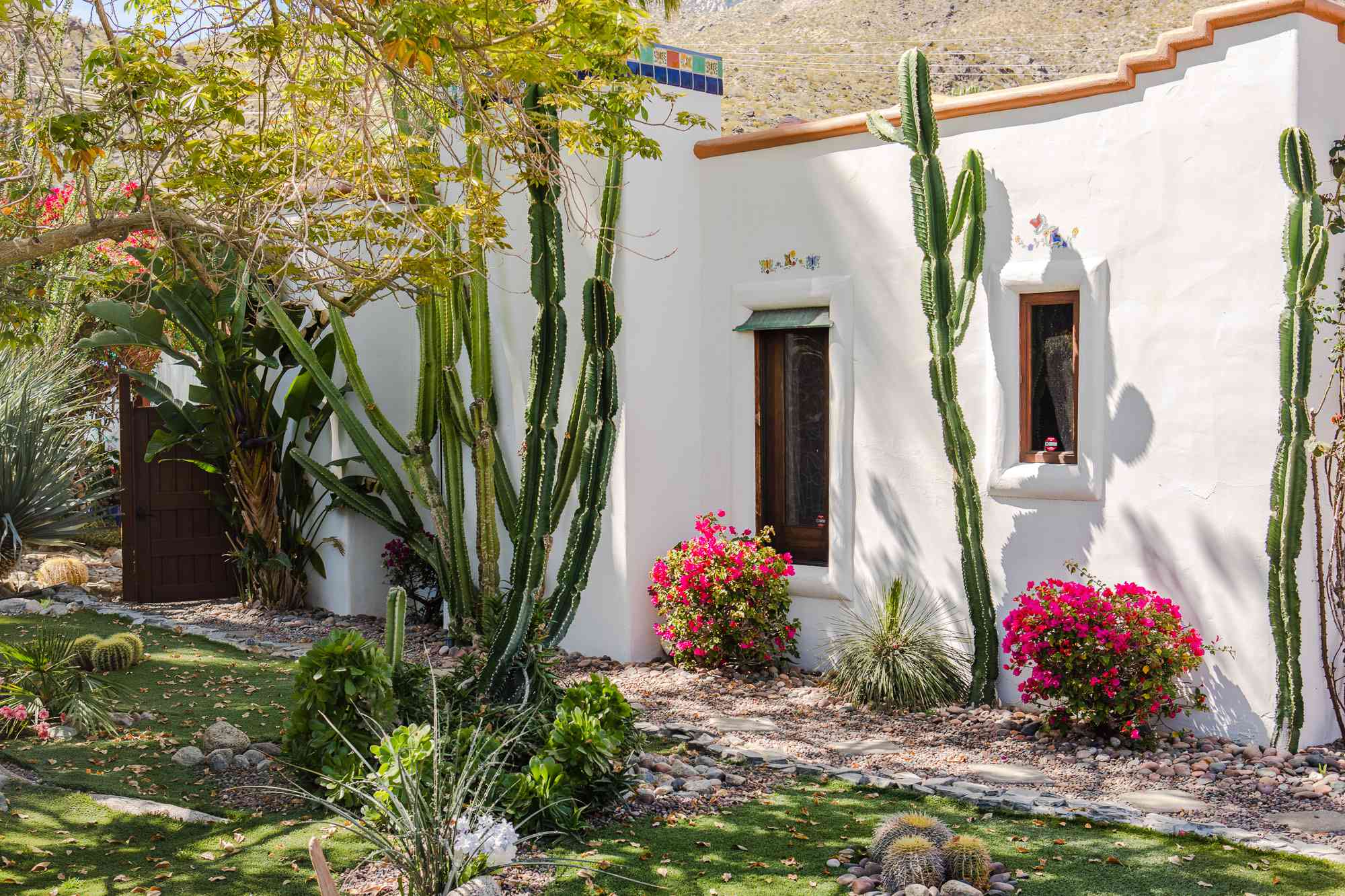
Desert landscaping combines beauty with low maintenance, using drought-tolerant and heat-resistant plants to thrive despite limited water. To create a stunning desert garden, incorporate hardscaping elements like gravel plant beds and choose plants that are adapted to harsh conditions. Desert landscapes are not only visually striking but also straightforward to plan and maintain, offering a serene, natural beauty through unique colors and native plants. This guide presents various design ideas to inspire your desert gardening projects.
The Spruce / Sarah Crowley
Desert Landscaping Considerations
Desert gardening may have some special considerations, but the basics still apply. You need to know your USDA hardiness zones, get to know your soil, and study where the light falls and where the winds are strongest. Plants native to a desert area will be the easiest to maintain—some plants to consider are succulents, agave, yucca, aloe, palo verde, and cactuses.
Look at ways to comfortably enjoy your space at different times of the day or evening. The desert is also known for extreme temperatures: sweltering during the day but chilly once the sun goes down.
Plants to consider are shady trees, such as a Chinese pistache, that can grow in an arid climate or a tree native to the American Southwest, like a desert willow. You can also use a pergola to provide shade for harsh, sunny days. Since desert evenings can get cool, add a firepit for colder nights.