
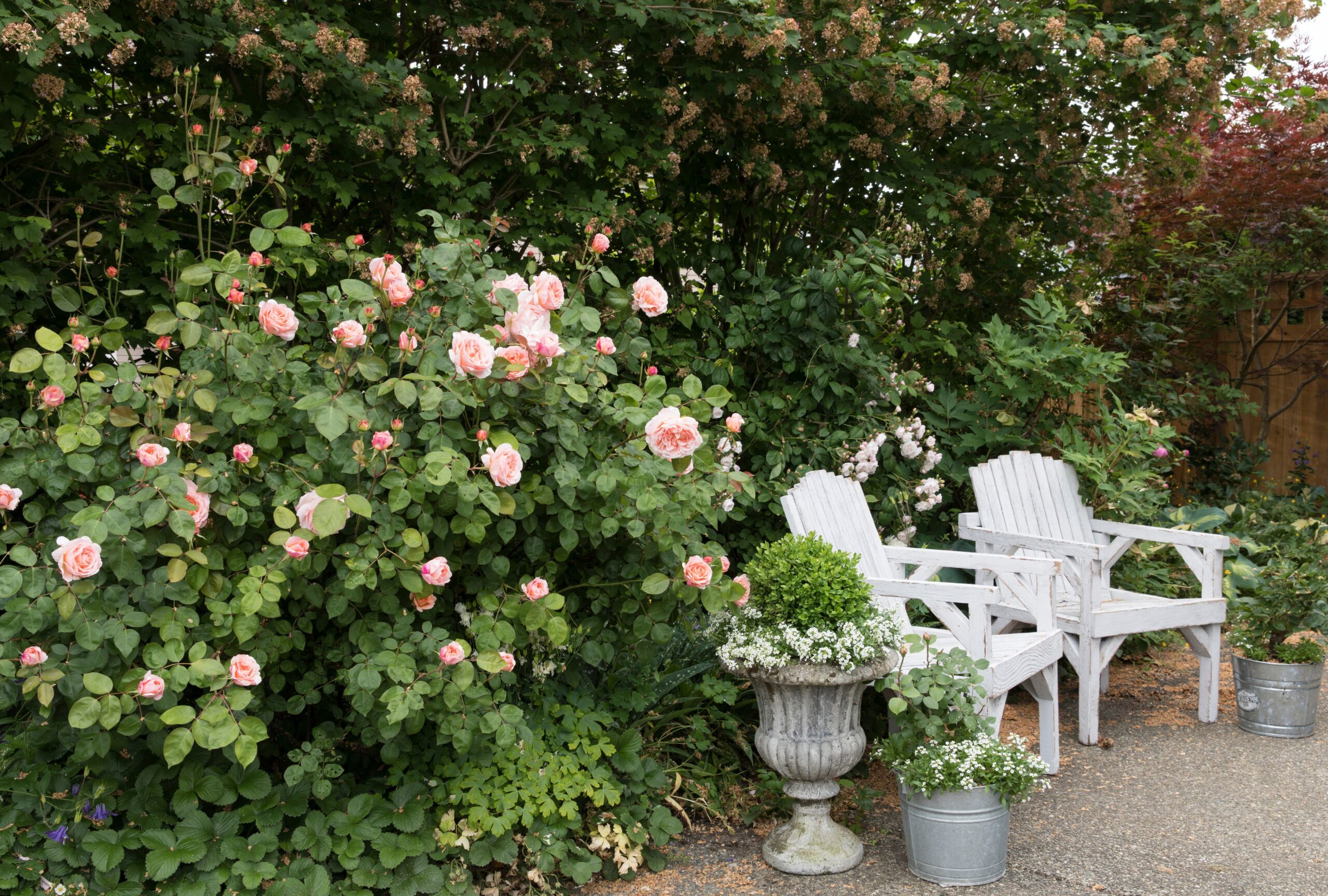
Pristine and perfect? No, thank you. Tracie Fish has long championed a more relaxed, authentic approach, filling her family’s cottage-style garden in Washington with nostalgic plants, rusted flea market finds, and moss-covered flagstone paths. “Over time, our garden became this cozy, joyful bit of chaos,” says Fish. Here are her top tips for creating a space that evokes classic cottage gardens with their freewheeling abundance of flowers and vintage structures.
Line Pathways with Flowers
Laurie Black
Cottage garden style is all about layering flowers, a tenet that Fish happily applied to her garden. The pathway leading up to it is lined with lady’s mantle, purple columbine, lavender, and ‘Sarah Bernhardt’ peonies. To provide structure and “contain the chaos,” as Fish puts it, she installed formal boxwoods and hardy ‘Polar Joy’ rose trees.
Create Different Zones
Laurie Black
Amid the profusion of plants, Fish found ways to make each part of the garden feel like a distinct space. Archways are positioned to act as doorways, while varying the materials underfoot—gravel, flagstone, grass—delineates each space.
When designing a garden, it helps to begin with the structures. In Fish’s garden, she installed a picket fence, a few metal arches, and a chicken coop built from the salvaged timbers of an old church early on, then layered on the flowers over time.
Encourage Self-Seeding Annuals
Laurie Black
Fish delights in planting self-sowing annuals like alyssums, cosmos, and larkspurs that drop their seeds to later emerge in random places throughout the garden. Case in point: a pathway where columbines have popped up in ever-increasing numbers each year. “Nature has its own art, so let it be,” she says.
Tracie Fish
You want garden paths that draw you in and don’t reveal everything at once. I love when you turn a corner in the landscape to find the unexpected.
— Tracie Fish
Make Room for a View
Laurie Black
The back patio was thoughtfully built to capture views of the lawn and its perennial borders but was also framed with orbs of boxwoods to make it feel like an enclosed garden room of its own. For a rustic-modern look, Fish outfitted the area with sleek-but-aged metal café chairs around a wood-plank dining table.
Combine Old & New Rose Varieties
Laurie Black
For maximum fragrance and petal count, Fish planted both antique rose varieties and vintage-style modern hybrids that are bred to be more resilient. You can source old-time favorites from local plant sales or online sources. For antique-looking roses with modern-day performance, hit the nursery. Try plants from David Austin Roses, Proven Winners’ ‘Reminiscent’ series, or Monrovia’s ‘Eau de Parfum’ series.
Fish’s favorite rose of all time? A newer variety from David Austin Roses called ‘Olivia’, which combines disease resistance with frilly, fragrant flowers.
Build Vertical Interest
Laurie Black
Use tuteurs (French for “support”) to add height and drama to borders. The pyramid shape structures can support plants like climbing roses and clematis—and give you something to look at when flowers aren’t blooming. Fish opted for classic white, but you can find tuteurs in metal or rustic wood, or even paint them to personalize their look.
Allow for Visual Breaks
Laurie Black
Throughout the yard, Fish used green and white to provide a calming respite from the colorful flowers. Alongside a classic white picket fence, a path of green boxwood and white columbines leads to the next exuberant scene in the garden.
Curate Vintage Finds
Laurie Black
While Fish loves the aged look that flea market treasures bring to the garden, she exercised restraint in her own space, opting for a few select timeworn birdhouses and chipped cement planters. “There is a difference between focal points in the landscape and clutter,” she says.