
We love fragrant flowers, with their amazing range of scents reminiscent of chocolate, cotton candy, and beyond. They have the power to trigger a memory—a pink peony can remind you of a favorite aunt—or a sense of calm (hello, gardenia).
It’s hard to remember that plants aren’t there to perfume our gardens—their fragrance is meant to attract pollinators or deter predators. A rose’s sweet smell, for instance, draws bees and butterflies.
Be Intentional About Scent
Still, you can rethink the way you use fragrance in your garden so it’s intentional. You can add a fragrant climbing rose over a back door, for instance, that also sends scent up to second-story windows. Aim for staggered releases of scent, just as you aim for succession planting in which blooms unfold over weeks instead of all at once.
Keep in mind that some plants, like witch hazel, perfume the air as you walk by. Other plants have scents that aren’t easily carried on the wind. Those plants, such as roses and violets, work better near paths or in containers, where you can bend down to smell them. Plants with fragrant leaves can be placed near walkways, where you might brush up against them and release their scent.
Scatter your fragrant plants throughout the garden so you’re not overwhelmed by competing scents; don’t forget to take into account other smells in your garden, such as just-mowed grass or fresh compost.
Here are our recommendations for adding fragrance to your outdoor living space, day or night.
Azalea
Bob Stefko
Some types of azaleas are not only colorful but also have an enchanting fragrance in gardens. They thrive in acidic soils with plenty of organic matter like compost. Varieties such as ‘Daviesii’, ‘Else Frye’, and ‘Tri Lights’ are known for their lovely scents.
Growing Conditions: Part shade in acidic, well-drained soil
Size: Up to 5 feet tall
Zones: 5-10
Dianthus
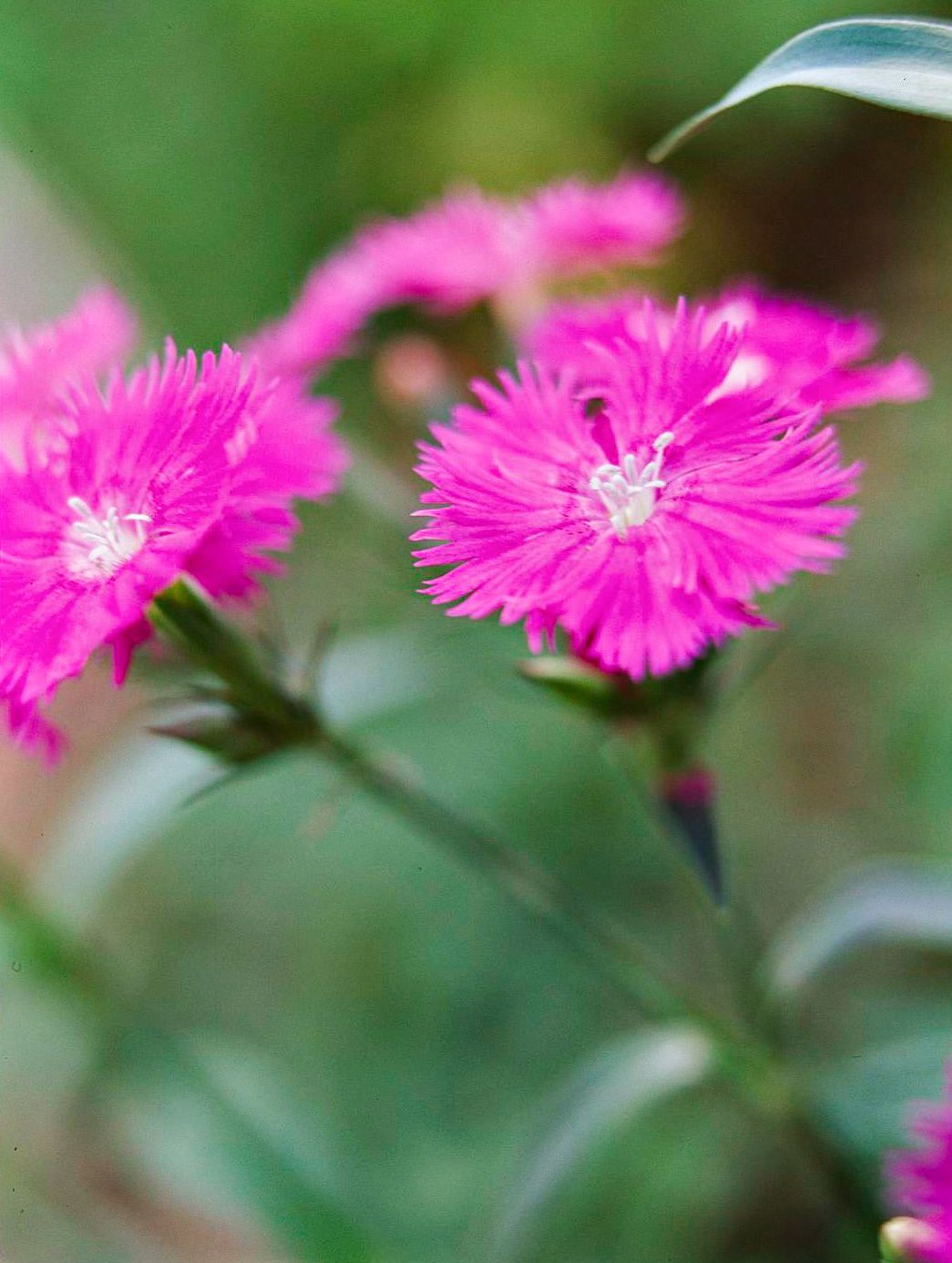
Dianthus is loved for its classic cottage garden characteristics, with fringed petals that give it the common name “pinks.” This charming favorite is celebrated for its pink, white, red, or bicolor blooms, emitting a spicy, clove-like fragrance. Depending on the variety, its flowers can add charm to your garden in spring and summer.
Growing Conditions: Full sun in evenly moist, well-drained soil
Size: Up to 1 foot tall
Zones: 4-8
Gardenia
Gardenia (Gardenia jasminoides) is a classic for its powerful fragrance, loved by many garden enthusiasts. In warmer climates, plan on planting them in the fall or spring. Gardenia can also thrive as a houseplant; however, it’s important to maintain sufficient humidity indoors, as they can be sensitive. You can enjoy gardenias in containers outside during warmer months and move them indoors when it gets cooler so they can survive through the chillier season.
Growing Conditions: Light to moderate shade in well-drained, acidic soil
Size: Up to 6 feet tall
Zones: 8-11
Lily of the Valley
Though small in stature, the delicate Lily of the Valley (Convallaria majalis) delivers an impactful scent through its charming pink or white bell-shaped flowers. This hardy, low-maintenance groundcover thrives in shady spots and can often be left alone after planting. However, it can spread aggressively in some climates, so you’ll want to plant it where its growth can be managed.
Growing Conditions: Full to part shade in moist, well-drained soil
Size: Up to 1 foot tall
Zones: 3-8
Caution: This plant is toxic. All parts, including its berries, can be harmful if ingested.
Nicotiana
The star-shaped blooms of nicotiana (Nicotiana alata) can fill your garden with a strong, sweet fragrance all summer into fall. A relative of tobacco, nicotiana is also known as flowering tobacco or jasmine tobacco. Plant it near your patio or a bedroom window in a moon garden because the scent is most pronounced at night.
The blooms come in white, cream, yellow, lime green, pink, and red. And although it’s perennial in frost-free regions, nicotiana is usually grown as an annual.
Growing Conditions: Full sun to part shade in moist, well-drained soil
Size: Up to 5 feet tall
Zones: 10-11
Oriental Lily
Powerfully fragrant and stunningly gorgeous, growing Oriental lilies such as the famous ‘Star Gazer’ can perfume an entire garden. Oriental lilies bloom in mid- to late summer in white, pink, and yellow. So whether you add this showy flower to your perennial border or container garden, it will provide long-lasting color and make a gorgeous cut flower.
Growing Conditions: Full sun to part shade in medium moist, well-drained soil
Size: Up to 4 feet tall
Zones: 5-9
Garden Phlox
One of summer’s most fragrant and showy flowers, phlox (Phlox paniculata) bears big clusters of candy-colored blooms on tall stems from mid- to late summer. These blooms have a sweet scent, most apparent on warm, sunny days. This perennial border staple also attracts hummingbirds and butterflies.
Growing Conditions: Full sun to part shade in evenly moist, well-drained soil
Size: Up to 4 feet tall
Zones: 3-8
Rose
Renowned for being America’s national flower, the rose offers an extensive palette of colors and scents. Many varieties have delightful fragrances. If you’re choosing roses, take a whiff first, as fragrances can vary significantly. Some roses smell citrusy, while others might offer floral, musky, or fruity notes.
Growing Conditions: Full sun to part shade in evenly moist, well-drained soil
Size: Up to 3 feet tall
Zones: 5-9
Sweet Pea
Sweet peas (Lathyrus odoratus) are a bushy or climbing annual that blooms from spring to early summer. They’re prized for being one of the most fragrant flowers. It will climb up to 8 feet as a vine in a single season. Without support, it will grow in a bushy mound up to 30 inches tall. Their flowers appear in nearly every shade, plus stunning bi-colors.
Growing Conditions: Full sun in medium moist, well-drained soil
Size: Up to 8 feet tall
Hyacinth
For early spring perfume in the garden, nothing beats hyacinths (Hyacinthus orientalis). Plant them in fall in well-drained soil to enjoy their powerful scent the following spring. Flower colors range from purple to pink, red, white, and yellow. Grow hyacinths along paths or in mixed borders, rock gardens, and containers. You can even force its bulbs to enjoy indoors during the winter.
Growing Conditions: Full sun in medium moist, well-drained soil
Size: Up to 1 foot tall
Zones: 4-8
Bearded Iris
Bearded irises are available in almost every color of the rainbow. They’re among the most fragrant flowers in any spring garden, with scents ranging from anise to floral to fruity.
‘Dusky Challenger’ has a chocolate scent and dark purple color and raises the standards of dark iris to a new level. The large, heavily ruffled flowers and sweet fragrance of ‘Belgian Princess’ have an engaging appeal. The scented purple flowers with yellow beards of ‘Variegata’ are reminiscent of grape soda.
Growing Conditions: Full sun to part shade in evenly moist, well-drained soil
Size: Up to 3 feet tall
Zones: 4-9
Lilac
Thanks to their intense scent and color, lilacs (Syringa spp.) are hard to miss when they’re in bloom. Lilacs are durable and can thrive in almost any growing condition except shade. They’ve also held symbolic meaning in many cultures for centuries.
Growing Conditions: Full sun in dry to medium moist, well-drained soil
Size: Up to 12 feet tall
Zones: 3-7
Flowering Crabapple
Fragrant springtime blooms and jewel-like fruit make crabapple trees (Malus spp.) beautiful additions to just about any landscape. These small to midsize trees are available in several colorful varieties, including those that have upright, column-shaped branching, or weeping specimens.
In spring, they are covered with fragrant white, pink, or red flowers, and in fall with small yellow, orange, or red apples that attract birds. Some of the most fragrant crabapple varieties include ‘Charlottae’, ‘Brandywine’, and ‘Prince Georges’.
Growing Conditions: Full sun in medium moist, well-drained soil
Size: Up to 20 feet tall
Zones: 4-8
Heliotrope
If you ask a handful of friends what heliotrope (Heliotropium arborescens) in bloom smells like, you’re bound to get a different answer from each person. Some say cherry pie, others say vanilla, and others say grape jelly. But, no matter what you think it smells like, you’re sure to love the sweet, rich fragrance that emanates from the pretty clusters of purple, blue, or white flowers. It’s easily grown as an annual in locations where it isn’t hardy.
Growing Conditions: Full sun in evenly moist, well-drained soil
Size: Up to 18 inches tall
Zones: 10-11
Lavender
Be transported to Provence by growing lavender (Lavandula spp.) in your garden. The flowers and foliage of this herb produce aromas that permeate the countryside of southern France in midsummer. In your own garden, try growing it in a perennial border, rock garden, herb garden, or scented garden. If you plant it next to a walkway, you’ll catch a whiff every time you pass by.
Growing Conditions: Full sun in dry to medium, well-drained soil
Size: Up to 3 feet tall
Zones: 5-8
Sweet Alyssum
Producing carpets of lightly fragrant flowers in white, rose, lavender, or purple, sweet alyssum (Lobularia maritima) is an easy-to-grow, low-maintenance cool-season annual. Plant them in masses to enjoy its light honey fragrance in edgings, flower beds, rock gardens, hanging baskets, and window boxes.
Growing Conditions: Full sun to part shade in medium moist, well-drained soil
Size: Up to 9 inches tall
Peony
The old-fashioned, fuss-free peony (Paeonia spp.) can thrive for years without special care. The petal-packed blooms make perfect cut flowers, and you can even dry peony flowers to enjoy them year-round. However, not all varieties are fragrant. The double, white-and-pink peonies tend to be the most fragrant.
Growing Conditions: Full sun to part shade in medium moist, well-drained soil
Size: Up to 3 feet tall
Zones: 3-8
Moonflower
As its name suggests, moonflower (Datura spp.) opens at night. Like flowering tobacco, this plant is perfect for a moon garden because its big, pure white, trumpet-shaped flowers are most fragrant after the sun goes down. It is easily grown as an annual where it isn’t hardy.
Growing Conditions: Full sun in evenly moist, well-drained soil
Size: Up to 4 feet tall
Zones: 9-10
Though this plant is beautiful, it is highly toxic, so keep it in a spot out of reach of children and pets.
Southern Magnolia
Among the most majestic trees, Southern magnolia (Magnolia grandiflora) is widely planted for its beautifully fragrant, creamy-to-white spring flowers. Its large, shiny, evergreen leaves with a fuzzy underside and red fruit in the fall add to its seasonal appeal.
This large tree is one of the most stunning additions to any ornamental garden landscape. Be sure you know when to prune your magnolias so they’ll look beautiful year-round without sacrificing any blooms. Dwarf magnolias are also available.
Growing Conditions: Full sun to part shade in moist, well-drained soil
Size: Up to 80 feet tall
Zones: 7-9
Mock Orange
One of the most fragrant flowers you can plant in your garden, mock orange (Philadelphus selections) is grown primarily for its scented white flowers. Its four-petaled blooms resemble the shape of orange blossom, though it doesn’t belong to the citrus family.
Growing Conditions: Full sun to part shade in medium moist, well-drained soil
Size: Up to 12 feet tall
Zones: 4-8
Viburnum
If you want sweet-smelling flowers in your garden and colorful berries in the fall, try viburnum shrub varieties such as Korean spice viburnum and fragrant snowball viburnum. The flowers can be pale pink or white, and berries come in shades of blue, red, and even black. The berries will attract birds to your garden.
Growing Conditions: Full sun to part shade in medium moist, well-drained soil
Size: Up to 16 feet tall
Zones: 2-8
Tree Lilac
Japanese tree lilac (Syringa reticulata) is fragrant like shrub lilacs, though the scents are very different. Plus tree lilacs get taller. You can find varieties with flowers in shades of pink, purple, and white. These lilacs are also pretty drought-tolerant once established.
Growing Conditions: Full sun in evenly moist, well-drained soil
Size: Up to 30 feet tall
Zones: 3-7
Daffodil
Nothing smells like spring more than a garden full of daffodils (Narcissus spp.). The yellow, orange, and white cup-shaped blooms add texture and color to the landscape. To start your fragrant garden early, force the bulbs indoors. Some more fragrant daffodil varieties include ‘Actaea’, ‘Baby Moon’, and ‘Canaliculatus’.
Growing Conditions: Full sun to part shade in medium moist, well-drained soil
Size: Up to 30 inches tall
Zones: 4-8