
By Rosanna Spence | Published – 14 Jun 2023
Is your garden on a gradient? If you’re ‘tiered’ (sorry) of having to push the mower uphill and then struggling to control it on the way back down, you might be on the hunt for tiered garden ideas to help create usable space.
We’ve got you covered! Creating tiers and terraces is a helpful solution for a sloping garden, as levelling out areas makes them more suitable for planting, installing decking, and adding garden seating.
for more insight, we spoke to award-winning garden designer Matthew Wilson, who shared one of his best tiered garden ideas with us.
A terraced garden can “feel like a real challenge”, he says. “But having designed a great many of them over the years, I think they offer great opportunities.”
Plant across all the terraces
Don’t group too many plants together
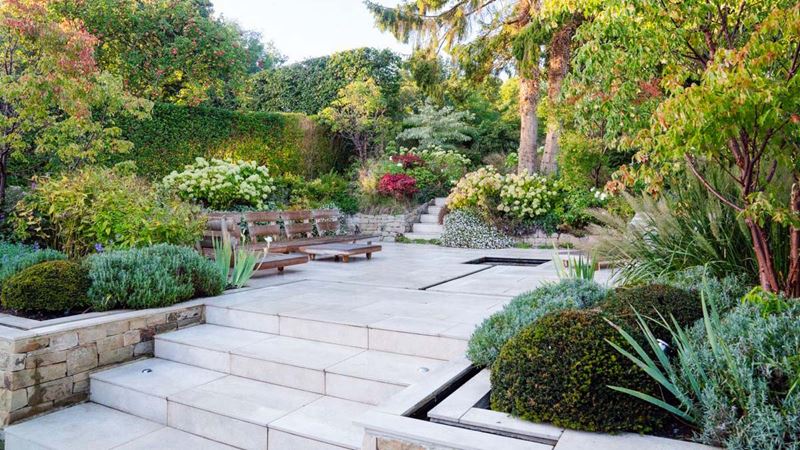
Image credit: Matthew Wilson Gardens / Rachel Warne
Many tiered garden ideas create space for planting where a slope may have been too steep. Though this is useful to create better soil structure and more organised beds, you might be tempted to be a little too organised and clump too many similar-looking plants together.
“Make sure your planting extends across terraces, rather than ghettoising one group of plants in one terrace, then the next group in another,” says Wilson. “By drifting plants across terraces, everything feels more coherent and generous.”
He demonstrates this approach well in his design here, lining the terraces with deep borders, but mingling different plant types together. Small conifers share beds with fluffy pampas grasses, rosemary bushes and taller trees.
Build raised beds
They can incorporate seating, too
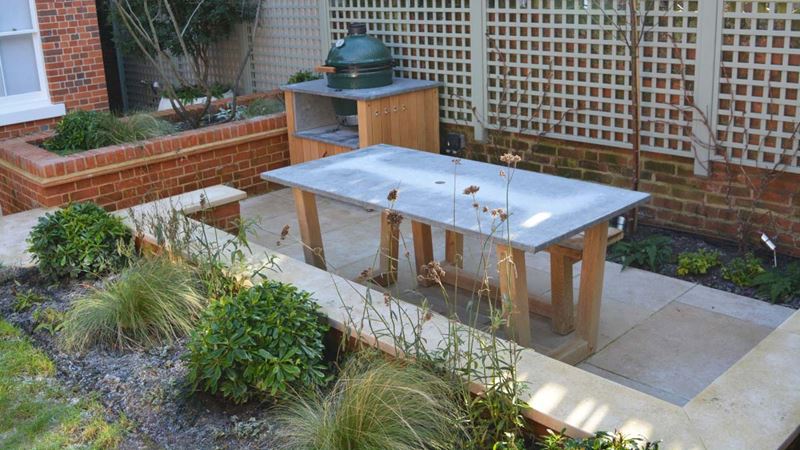
Image credit: Oxenwood
Raised beds are a natural fit for many tiered garden ideas, as their shape and structure suit a terraced plan. But they can be more than just places to keep plants.
If your raised bed is built with a wide, smooth surface around its border, a useful seating area can be created – as with this design from Oxenwood. The tiered garden frames the central dining table, so you can settle in for a meal without having to buy more garden chairs or add another bench.
This is handy if you have a modest outdoor kitchen or barbecue area, and want to make the most of the space you host in.
Embrace symmetry
Mirror the terraces around a seating area
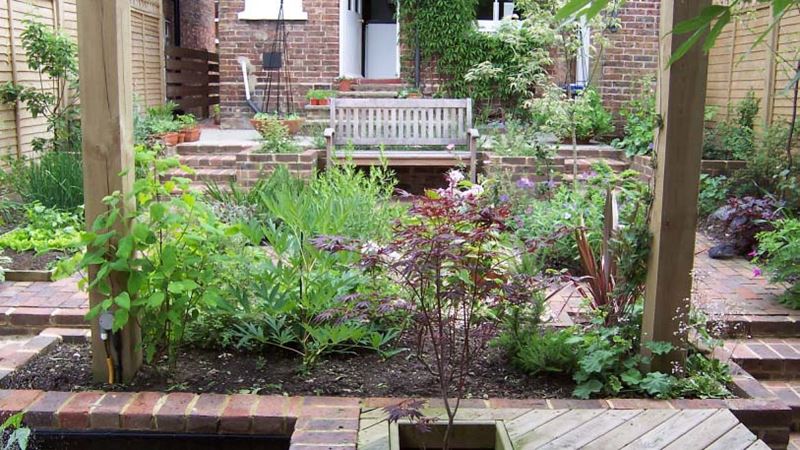
Image credit: May & Watts Garden Design
This tiered garden idea from May & Watts Garden Design transformed a small garden into an impressive space.
By mirroring the terraces and embracing symmetry – in the style of a grand country estate, but on a small scale – the garden looks great, whether you’re standing at the back door, sitting on the bench, or you’re under the pergola looking back up at the house.
“We created three levels,” explains designer Mark Watts.
“We used planting and the bench as barriers for each tier. This tiered garden idea also incorporated a raised pond, herb garden pergola, and shady seating area at the bottom, with lush planting.”
Install gabions
Reinforce steep inclines
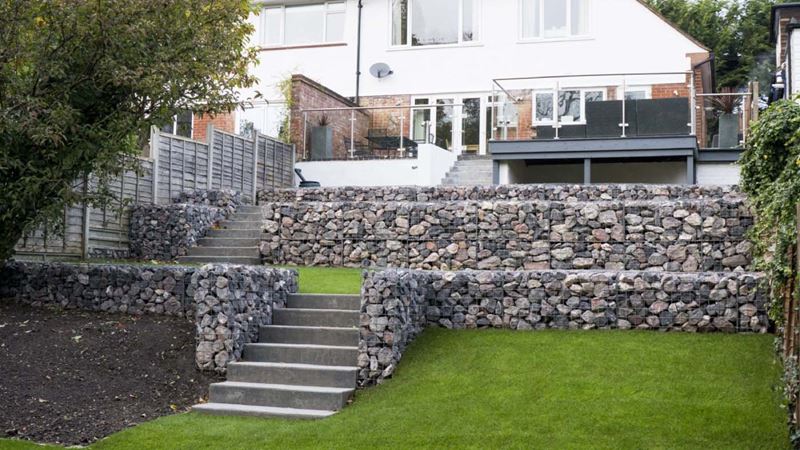
Image credit: Karl Harrison Landscapes
This is a tiered garden idea from Karl Harrison Landscapes, for homeowners planning to start a big landscaping project.
If your garden is particularly steep, and you want to create large terraces to use, then reinforcing the levels with gabion cages filled with rocks might be the way to go. They’re a sturdy solution for bordering each tier and can help to reduce the earth shifting and subsiding, especially if major groundwork has taken place.
If you fill the gabion cages with particularly large rocks, as in this example, you could transform an area into a small garden rockery. Choose plants that suit this environment, and you could create a habitat where alpines and succulents will thrive.
Deck out each tier
Separate the soft and hard surfaces
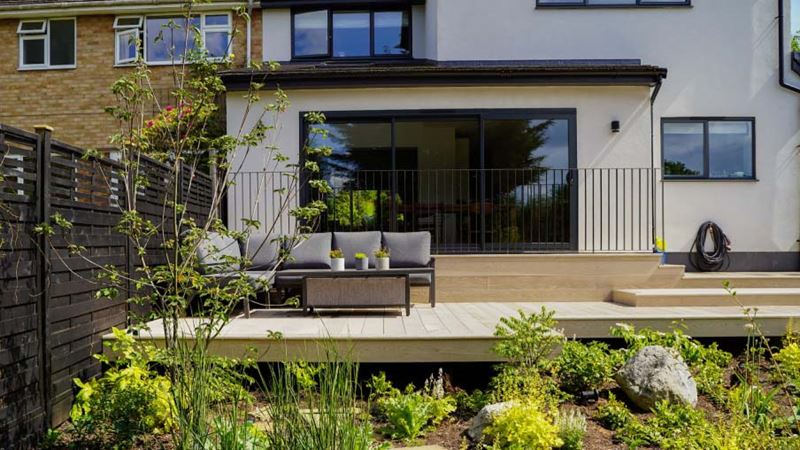
Image credit: Karl Harrison Landscapes
Installing multi-level decking can create smart, tiered areas instantly, no matter how steep the gradient of your garden.
Decking can help to level out uneven ground, and connect your interiors with alfresco living spaces, such as seating and dining areas. This design from Karl Harrison Landscapes extends the usable space from the house and into the garden, allowing the rest of the plot to be planted in a more natural scheme.
Decking can give you the best of both worlds: neatly terraced levels that can avoid the need for major ground work, while allowing the inclines and declines of your garden to retain their natural character.
Don’t be afraid to go deep
Give a greater sense of space
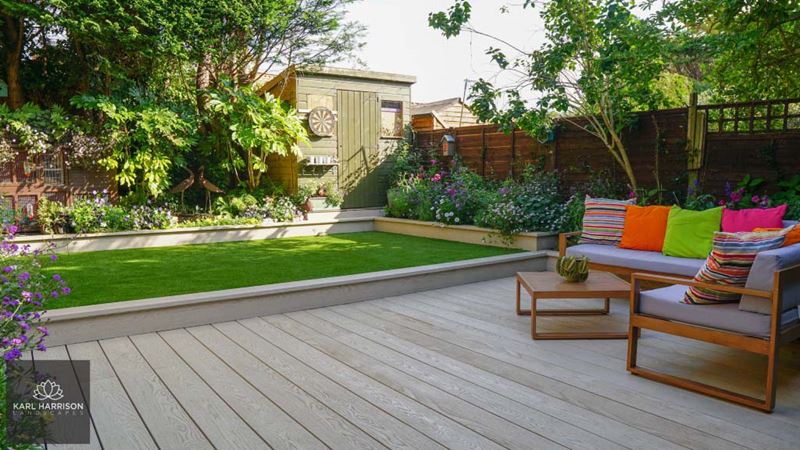
Image credit: Karl Harrison Landscapes
Not every tiered garden is created to manage a steep incline. Subtle, deep terraces can separate out distinct areas, depending on how you use your garden, as well as potentially helping to make a compact space seem less so.
“Try and make your terraces as deep and generous as possible,” advises Wilson.
“It will create a greater sense of space.”
That’s exactly what this design, from Karl Harrison Landscapes, achieves. The decking area is dedicated to hosting and seating, then there’s a subtle step up to a modest lawn; this is fringed with raised bed borders (check out the best plants for a raised bed if you’re unsure how to populate your own), which draw your eye to the furthest point of the garden.
Despite this outside space being a fairly modest plot, the tiers allow for lots of different functions without the overall design feeling chaotic or crowded.
Steer clear of too many materials
Create cohesion
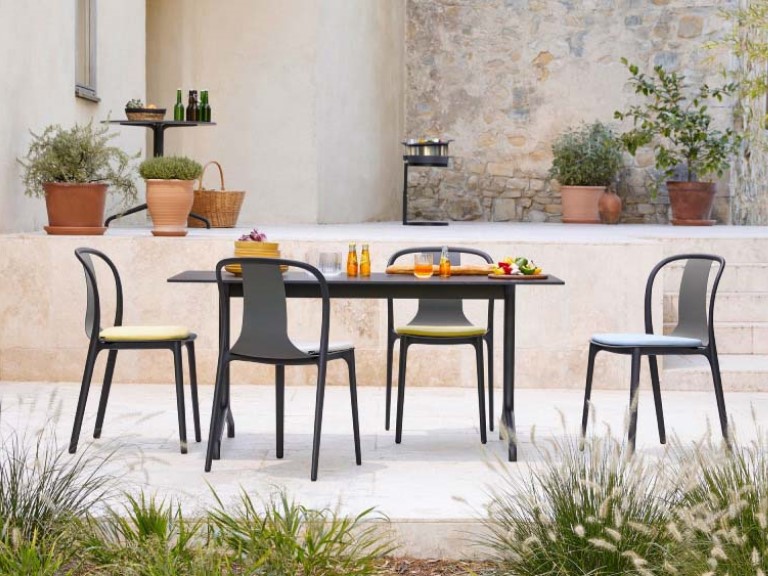
Image credit: Nest.co.uk
“Don’t use too many different materials,” says Wilson.
“Ideally just a single material for the facing of the terraces. This will create a more cohesive look.”
This tiered garden idea has constructed the terraced levels and steps out of the same masonry as the house. The neutral tones of the whitewashed stone soften the straight lines of the tier’s solid construction.
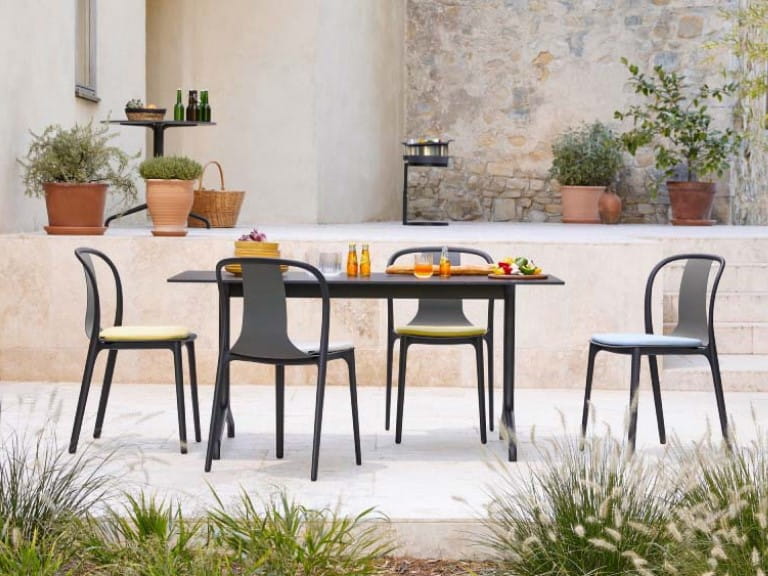
We love how the dining set contrasts against this cohesion with darker grey accents (avoiding a harsh black), and the way the ornamental grasses gently frame the lower terrace.
Add a focal point
A sculpture can add interest to a terrace
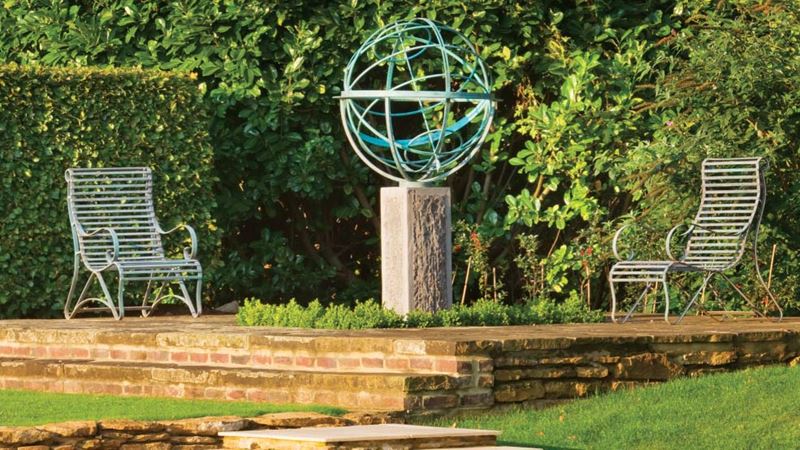
Image credit: David Harber
You don’t have to be restricted to planting on your newly created tiered garden or placing a dining set on a terrace. What about adding something striking to look at, such as a sculpture?
“Including a sculpture in your garden can transform an otherwise uninspired space,” says David Harber, who designed this charming example. No matter how big your garden, a sculpture or water feature can create a sense of grandeur, as well as a moment of contemplation.
This might also help you avoid a tricky situation if you have poor soil quality, a paved area or little to no sunlight in a spot. A sculpture or other non-natural focal point can brighten up a dark corner instantly.
Choose wider steps
Make your garden easier to climb
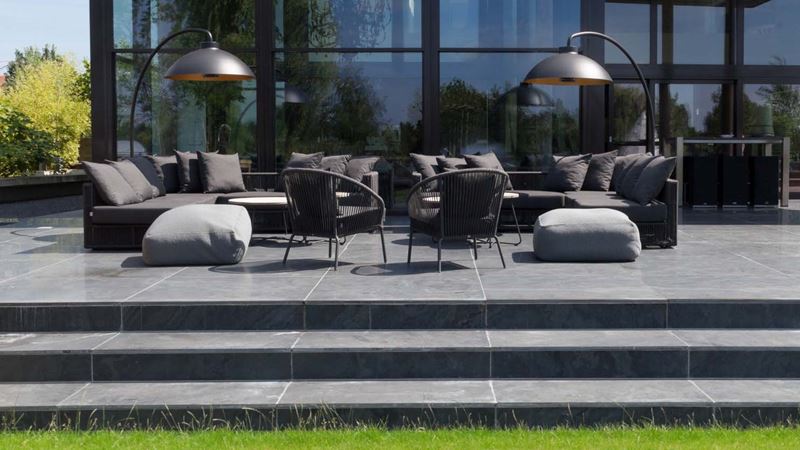
Image credit: Cuckooland
Any tiered garden idea will have to take into consideration how people will be able to move around the plot.
An unescapable factor of any terraced outside space is that there’s likely to be an incline or decline to contend with. Not everyone can manage steps, but there are ways to try and make them slightly more manageable.
“Make your steps wide and shallow,” suggests Wilson. “Steep, narrow steps are unpleasant to use and look ‘mean’.”
If you have the space available, this idea leads with the wide paving slabs, which help to emphasise the wide steps.
Include water
Step up, or down, to a pond or pool
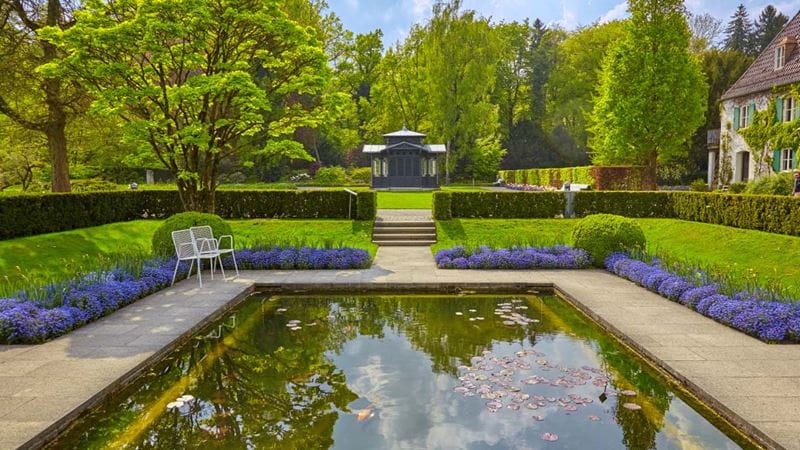
Image credit: Shutterstock / pixel creator
Wilson told Saga that he always tries to include water in his tiered garden ideas.
“Rills (a small stream) and waterfalls work brilliantly thanks to gravity,” he says. “They can also help to link the different terraces together.
We’ve seen examples of designers integrating entire ponds (and even swimming pools) into one of the raised tiers, but we loved this design, which leads you down some steps into a sunken pond.
Create tiny tiers
Don’t forget the smallest spaces
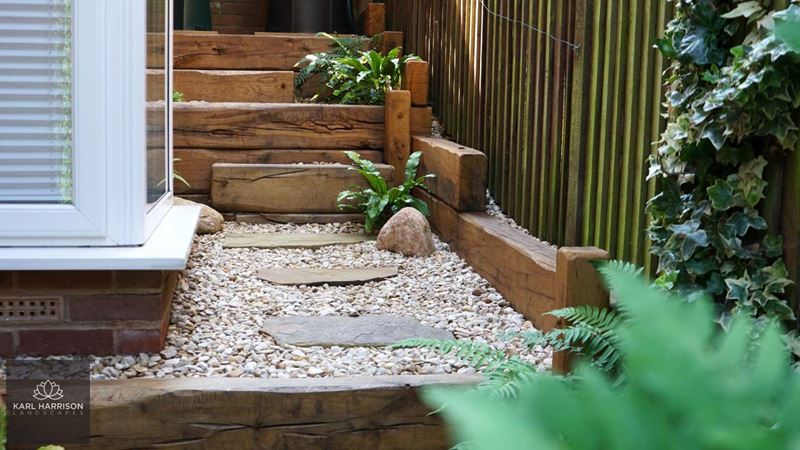
Image credit: Karl Harrison Landscapes
Sometimes entire properties are set within a hill or slope – affecting not just the garden but all the land surrounding the house. As this tiered garden idea from Karl Harrison Landscapes shows, even the smallest spaces, such as this side access, can be made easier to use by constructing a series of small terraces and steps.
By combining the natural materials of rustic timber sleepers, slate stepping stones, smooth rocks and gravel (and including a couple of plant plugs), this area has been transformed.
This can make accessing waste and recycling bins much more pleasant, and allows every corner of your outside space to be thoughtfully landscaped and safer to move around.
Build a terraced vegetable patch
Construct it from wood
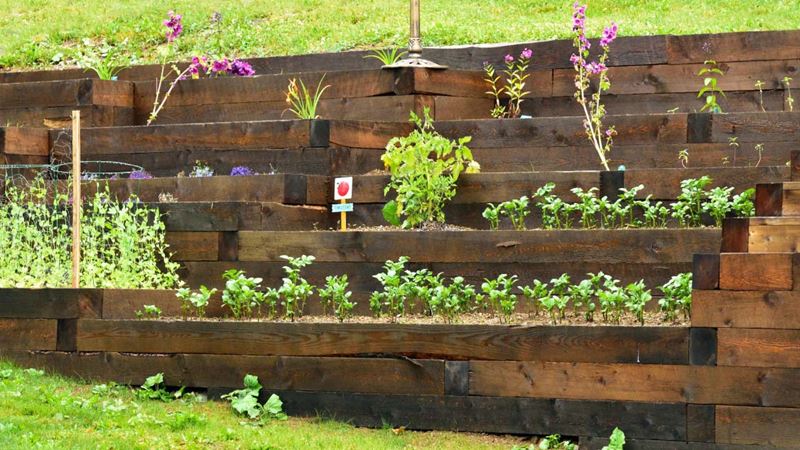
Image credit: Shutterstock / Greenseas
Who says vegetable gardens need to be on level ground? This tiered garden idea embraces a steep incline. It makes the most of this fertile space to grow a mixture of edible plants.
You may need to be surefooted to carefully navigate your way around these particular beds, which are edged with sturdy timber sleepers. But using this as inspiration, you too could turn a tricky sloping garden into a productive patch, perhaps incorporating a series of steps between the beds for better access.