
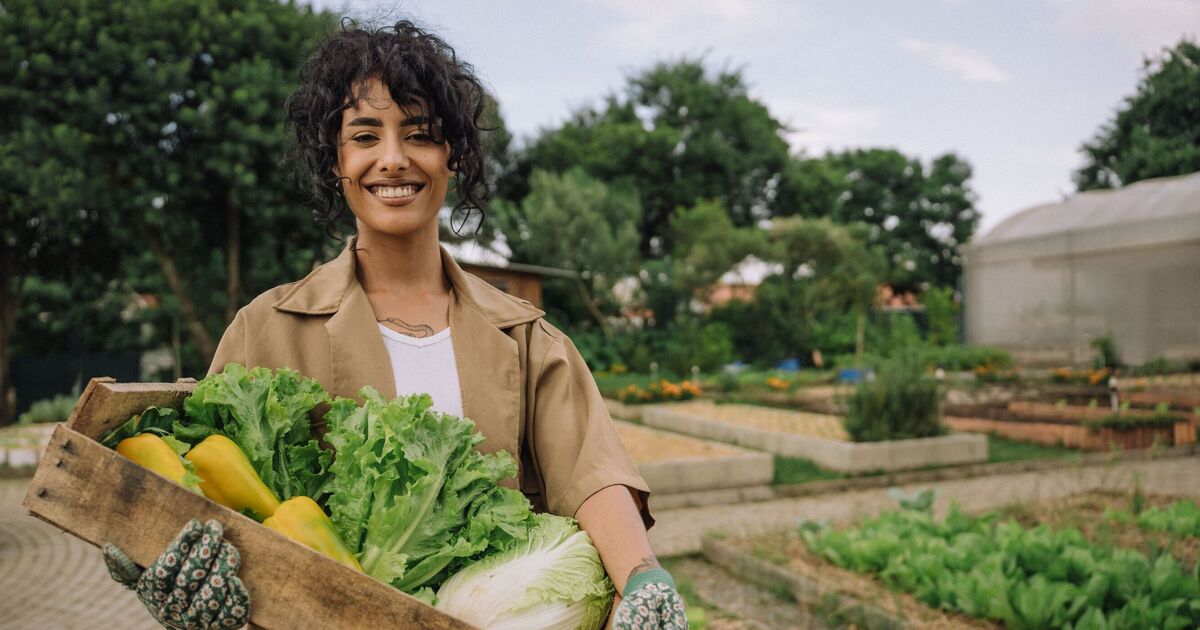

The experts recommend growing more expensive crops that you actually like. (Image: Getty)
With the cost-of-living crisis driving up food prices, you may be considering growing fruit and vegetables as a way to cut the cost of your weekly food shop.
Approximately 35% of adults in the UK already grow their own fruit, vegetables, or herbs, according to a 2023 report. This figure is based on surveys that ask about cultivating food in various spaces, such as gardens, balconies, or vegetable patches.
But doing it yourself is not guaranteed to save you money, so before you pick up your trowel and start digging, it pays to find out which crops you should grow to cut your food bill. What are the biggest money mistakes to avoi,d and how can you get stuff for free?
Gardening Experts recently spoke to the Guardian for tips on what to plant, the expensive mistakes to avoid and the joy of bartering with gardeners.
Generally, they all agree that the best way to save money is to figure out which fruit and vegetables you regularly buy from the supermarket that can be grown successfully in Britain, then prioritise the most expensive to purchase by the kilo.
Read more: The pretty UK market town with the most garden centres – 3 per square mile
Read more: I’m a landscape gardener and a small garden looks instantly bigger with this tip

Lettuces can be grown in window boxes if you don’t have a garden. (Image: Getty)
The Royal Horticultural Society’s Leigh Hunt says: “Often, people grow food like carrots and potatoes that is very cheap to buy – and spend a lot of money doing that.”
He recommends growing salad leaves saying: “A pillow packet of lettuce is going to cost at least £1. But lettuce and rocket are the kind of crop you can get cheaply and grow readily, and they will then regrow, and you will get another crop out of them. You can do this two or three times.”
Jane Perrone, who presents the gardening podcast On the Ledge, says growing fruit bushes is a good idea if you are looking to save money at the supermarket next year
She says: “If you look at the price per pound of fruit like blackberries, raspberries, blackcurrants, gooseberries and redcurrants, they are quite expensive at the supermarket. You can buy them quite cheaply as small bushes, and they will, without much effort on your part, produce pounds of fruit every year.”
An advantage of growing currants and berries is that if you get to the point where you have too many to eat fresh, you can freeze the rest. “Then you will have a supply through the winter,” she says.

Fruit bushes will bring new crops every year and the produce can be frozen. (Image: Getty)
Other recommended crops are beans and asparagus, which can cost between £2 and £3 a bunch in the supermarket.
Perennial vegetables, such as broccoli or cauliflower, are also excellent value for money. Perrone adds: “You plant them and you never have to sow a seed again. They’re so easy to grow, and a couple of plants can give you 10 or more tennis-ball-sized heads a year.”
Huw Richards, the author of Grow Food for Free and The Vegetable Grower’s Handbook, says the biggest trap gardeners fall into is buying seedlings.
“If you buy seedlings at the garden centre, it might cost you £3 for six kale plants. But if you spend that amount on seeds, you might get 300-400. And you will be able to use those seeds for another four or five years.”
“If you urgently need to cut your food bill, the good news is it usually takes only an extra week or two to get a harvest when you grow from seed rather than seedlings. Lettuce and radishes in particular grow quickly.”

Kale grown from seeds rathe than seedlings will save you money. (Image: Getty)
He recommends planting salad leaves and herbs from seeds if you want to save money. “In a very small space, you can grow enough to supply your whole household. Whereas in the same amount of space, if you just grow potatoes, it might only last you about a month.”
If you frequently buy parsley or coriander at the supermarket, growing it from seed will certainly save you money. The same applies to perennial herbs such as thyme, rosemary and sage.
Courgettes are also very good value if you plant them from seed. From one seed, you will get a plant that might provide you with 30-odd courgettes.
However, Perone warns not to plant seeds from vegetables you have bought for eating, as there are potential problems with this.
“If you plant any member of the cucurbit family – so courgettes, pumpkins, squash and butternut squash – it will probably be fine, but there is a risk of toxic squash syndrome due to a genetic mutation that occurs during pollination.”