
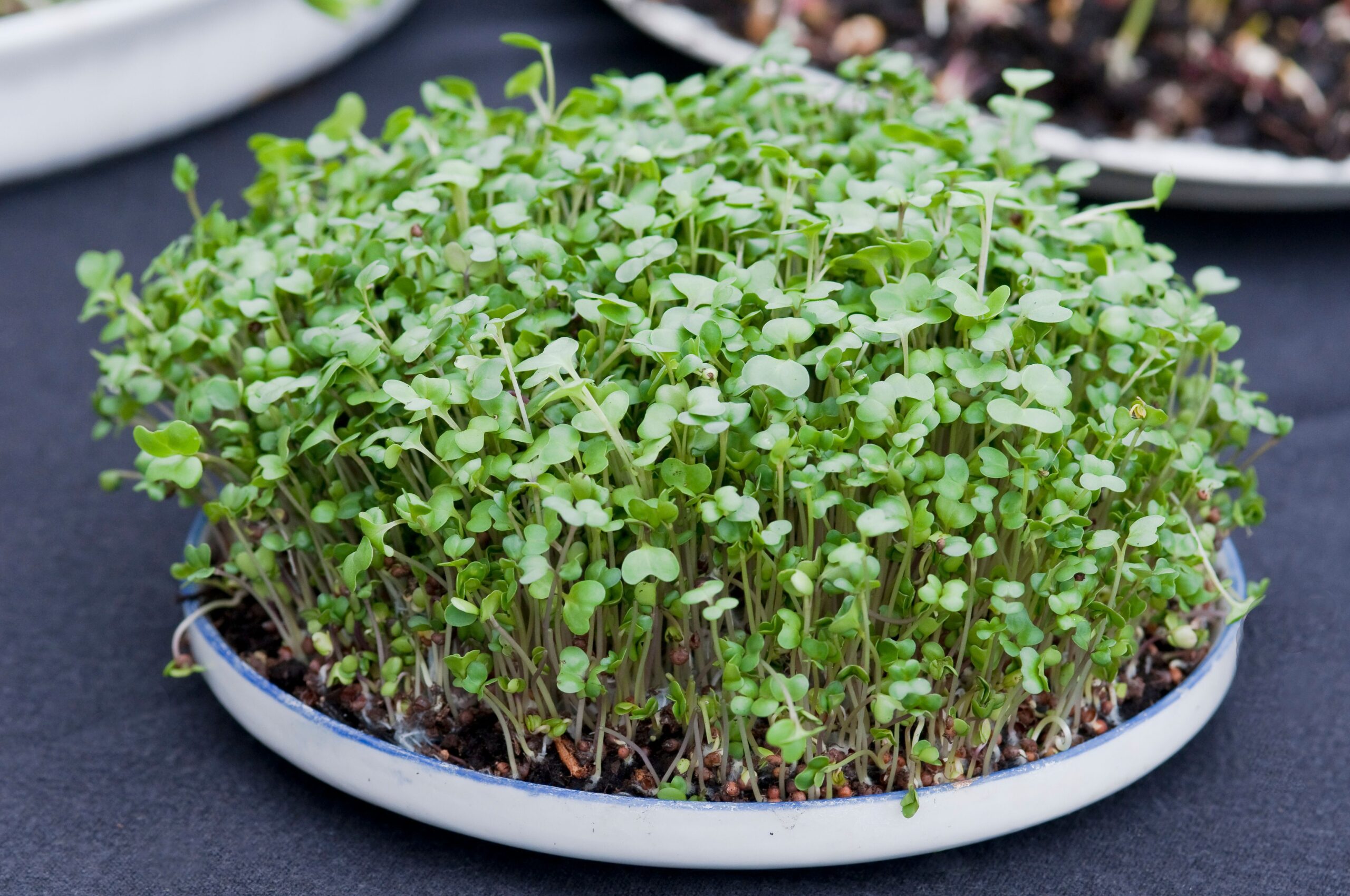
Fast-growing, packed with nutrition, and easy to cultivate on a sunny windowsill year round, microgreens can be a indoor gardener’s best friend. But the options go way beyond pea shoots. In fact, many of your favorite herbs and vegetables can be grown as microgreens that you harvest in just a few weeks. Here, we’ve rounded up some of the easiest and tastiest types of microgreens to grow at home right now.
Looking for a source for microgreen seeds? Try Johnny’s Selected Seeds and True Leaf Market for a large variety.
Radish
Johnny’s Selected Seeds
Some of the fastest veggies to grow in a garden, radishes are also quick to mature as microgreens. With their slightly spicy bite, radish microgreens will add unexpected heat to any dish. Like many other microgreens, radish microgreens can be sown in potting mix or soil-free growing mats. Varieties like ‘Red Rambo’, shown, will be ready to harvest 7 to 10 days after planting.
Kale
Courtesy of Johnny’s Selected Seeds
Kale is a popular plant to grow in cool weather gardens, but if you want to enjoy this vegetable at any time of the year, grow it as a microgreen. All types of kale can be used as microgreens, including purple and green varieties, but if you want to get lots of color, ‘Red Russian’ is particularly eye-catching with its bright pink stems. Like other microgreens, kale greens are harvested at the seedling stage before their true leaves emerge, or about 10 days after planting.
Red-Veined Sorrel
Johnny’s Selected Seeds
Red-veined sorrel leaves are sure to stand out in any dish you add them to. These zingy greens have a bright, lemony flavor that adds freshness to soups, sandwiches, and green salads. Compared to some other microgreens, red-veined sorrel takes a bit longer to grow—they’ll be ready to harvest about 17 to 30 days after planting.
Lentil
Courtesy of True Leaf Market
The seeds of lentil plants are commonly used in soups and other hearty fare. But many types of lentils can also be grown as microgreens, ready to harvest in just 3 to 5 days. Green, brown, yellow, and red types all make fantastic microgreens; just make sure that you don’t choose split lentils because these won’t sprout.
Beets
Courtesy of True Leaf Market
Beet microgreens pack all the earthy flavor of the full-size vegetable, just in a more delicate form. The ‘Bull’s Blood’ beet microgreens are particularly delicious and striking to look at, with green-red leaves sprouting on red stems. They’re generally ready to harvest in 16 or so days.
Chives
Courtesy of True Leaf Market
For a microgreen that really packs a punch, try chive microgreens, also called micro chives. The slender leaves of micro chives have an oniony flavor that’s perfect on baked potatoes and other savory dishes. They can be harvested in 14 to 25 days.
Mustard
Courtesy of Johnny’s Selected Seeds
The spicy heat that mustard greens are known for translates to their microgreen form too. Use them to elevate the taste of stir fries, salads and even cocktails. Mustard microgreens are harvested about 8 to 11 days after planting and the seedlings’ green or purple leaves contrast nicely against their bright white stems.
Arugula
Courtesy of True Leaf Market
Full-sized arugula leaves are often eaten as salad greens, but arugula microgreens are even more versatile. They can be used as garnishes on salads, potatoes, and egg dishes too. Fast growing and hardy, arugula microgreens mature in 10 days and stand out for their delightful, peppery flavor.
Broccoli
Courtesy of Johnny’s Selected Seeds
When you think of broccoli, you probably think of broccoli crowns, which are actually the immature flowerheads of the plants. But if you love the mild and slightly sweet flavor of these broccoli florets, you may also want to try growing broccoli microgreens. Broccoli microgreens are harvested 10 to 14 days after planting or when seedlings are about 2 to 3 inches tall.
Kohlrabi
Courtesy of True Leaf Market
Kohlrabi isn’t as commonly grown as some other veggies, but this tasty Brassica has lots to recommend it. Ready to harvest in about 1 to 2 weeks, kohlrabi microgreens have a sweet and mild flavor. Microgreens from purple kohlrabi seeds like the ‘Purple Vienna’ variety, shown, are particularly striking.
Sunflower
Courtesy of True Leaf Market
Don’t have the space to grow tall sunflower plants? No problem. Both black oil and striped sunflower varieties make delicious microgreens and they’ll be ready to harvest in 2 weeks. Just keep in mind that sunflower seeds have better germination rates if you soak them for 8 to 10 hours before planting.
Curled Cress
Courtesy of True Leaf Market
For a super-flavorful addition to sandwiches or salads, try curled cress. The clover-like leaves are some of the most peppery tasting microgreens around, especially when young; the flavor mellows as the greens grow larger. It also requires less water than many other microgreens as it sprouts.
Basil
Courtesy of True Leaf Market
Many kinds of basil grow well as microgreens, but ‘Red Rubin’ purple basil makes a particularly gorgeous garnish in salads, soups, and even desserts. Popular in Asian cooking, it has a sweet-spicy flavor that’s both bold and nuanced (some even taste a hint of cinnamon in it). It’s ready to harvest in around 25 days.
Marigold
Courtesy of Johnny’s Selected Seeds
In just a little over two weeks, some varieties of marigolds will sprout edible microgreens. Try ‘Gem’ for adding a slightly spicy kick and bright green leaves to salads.
Tips for Growing Microgreens
Most types of microgreens have similar growing needs. So if you master the basics of growing one type of microgreen, you can grow them all. Here are a few tips to boost your success:
- Large microgreen seeds, like peas and sunflowers, germinate better if you soak them for a few hours prior to planting.
- Place seedling trays in an area that receives at least 6 to 8 hours of bright light daily.
- Mist seeds daily to keep the soil or other growing mat moist.
- Harvest microgreens when stems are 2-3 inches tall and the plant’s first seed leaves have unfurled.
- Keep misting the remaining seeds after harvest and if you’re lucky, you may be able to get a second or even third harvest of microgreens out of a single planting tray before you need to sow more seeds.