
#3: Brown leaves could be a sign of overwatering or underwatering. Here’s how to tell the difference.
The leaves on your plants are turning brown, and you turn to Google for help. Many websites will tell you that brown leaves mean that you’re overwatering or underwatering your plants, which isn’t exactly helpful.
Darren explains: “Yes, it’s true that overwatering and underwatering generally have similar symptoms — leaf tips turn slightly yellow or brown. But the brown part has different texture [depending on the problem].
“If you’ve overwatered, the brown part of the leaf feels a bit mushy. But if you’ve underwatered, the brown parts will be a bit crispy. So all you need to do is to feel the leaves.”
#4: Found spider mites on your plants? This is what you should do.
At some point in your gardening journey, you’ll probably have to face spider mites, one of the most common pests that plant owners contend with.
“Spider mites happen when conditions are too hot and dry,” says Darren. “The leaves will get fine white spots, and when it gets very serious, almost the whole leaf becomes white. It’s more obvious from the back of the leaf, so flip the leaves over to check for spider mites. The mites themselves are like little black dots, but they make the plant surface look like there are many white spots.
There are a couple of methods he recommends to get rid of spider mites.
“If it’s very serious, I’d pluck off the whole leaf. But if it’s a light infestation, you can use neem oil if you want to use something organic. Otherwise, you can use sulphur soap and mix it with water and spray [it on affected areas].”
#5: There’s no one-size-fits-all plant care guide.
Conscientious newbie plant owners would Google up a storm to find out various ways to care for their plants, from how often to water them to what kinds of fertilisers to use. But it’s important to know that “the same plant in different conditions may have to be treated differently,” Darren points out.
“Before you buy a plant, it’d be good to know the conditions it needs, then tailor it according to the environment you have.
“Some people might say to water a certain plant every two to three days, but that depends if it’s in an indoor or outdoor space. If it’s indoor, it may have to be watered every two to three days. But if you’re placing that same plant outdoors where there’s more ventilation, you may have to water it every day.”
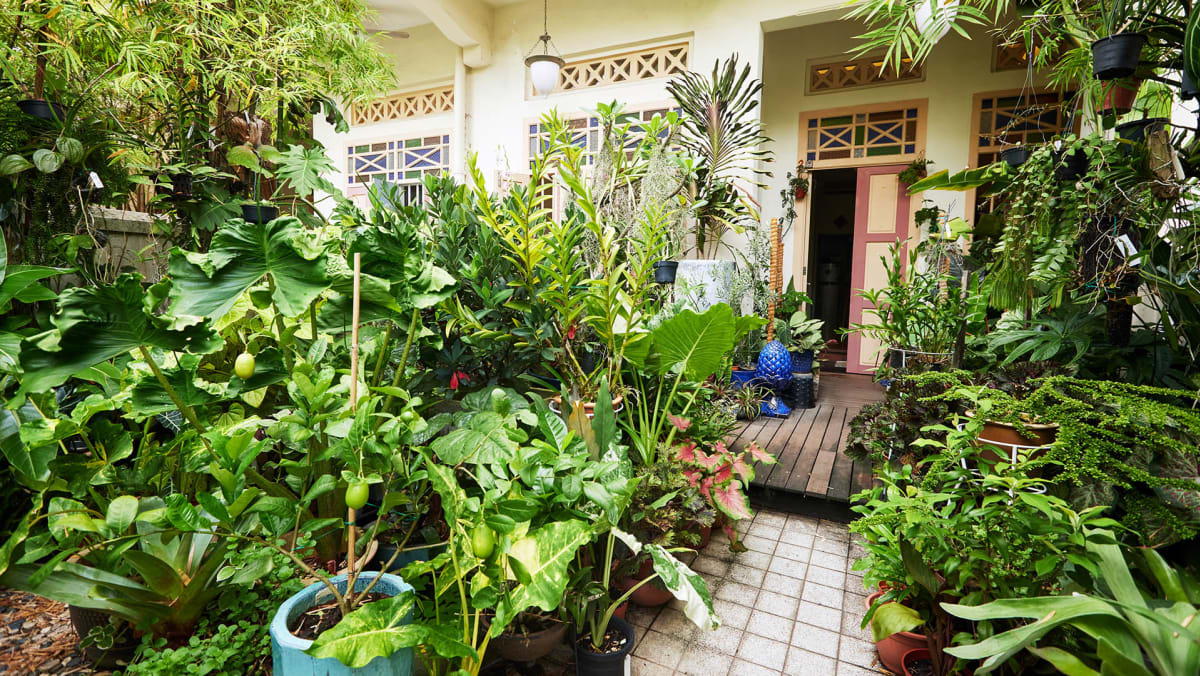
Check out a tour of Darren’s home garden here.
Photos: Kelvin Chia