
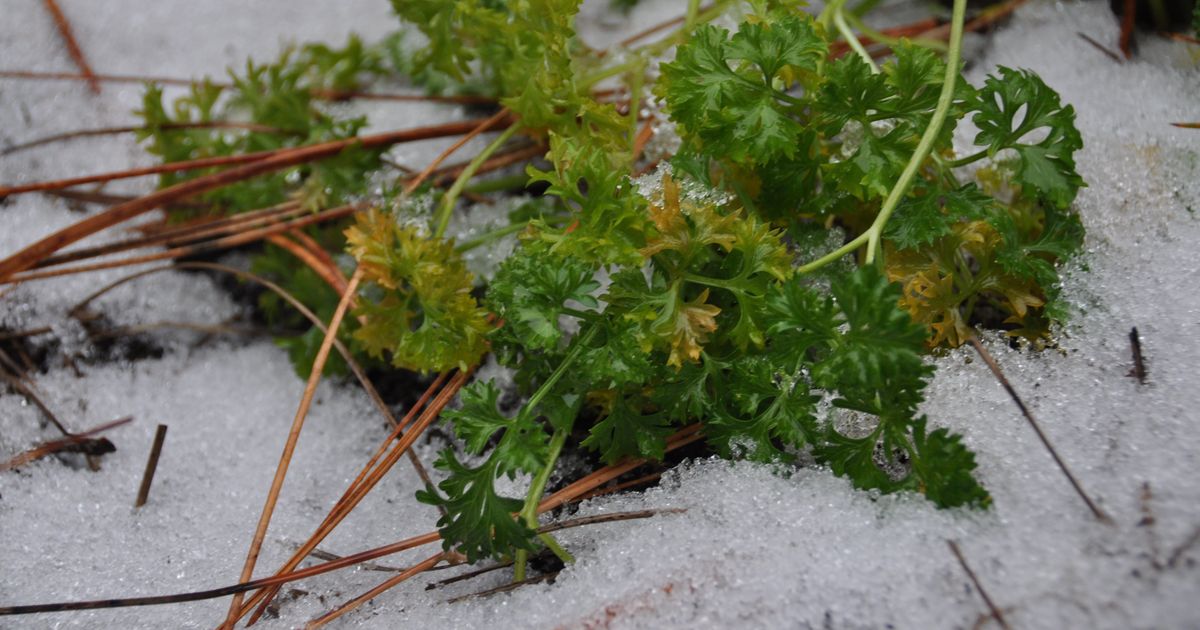
So here we are in the first week of a new year still waiting for the real cold to show up. Our garden beds have been mulched to protect plants in anticipation of something colder than 20 degrees. But just how much cold can different vegetables take in unprotected gardens?
Recently I ran across a blog from the Garden Betty website (gardenbetty.com) that featured a thorough list of common vegetables that can survive temperatures well below freezing in an unprotected garden. Garden Betty is garden blogger Linda Ly who lives in Bend, Oregon, a climate that might be a little warmer than ours but not by much. Some of you may know her from when she used to write about gardening in balmy Southern California. She now lives in Bend and shares her experiences in growing in a climate similar to ours.
Like many of us here, she has learned that many of the so-called guides for gardening don’t fit our growing conditions. Bend, like Spokane, has many temperature quirks that can only be learned from experience over several years. Growing vegetables over winter is challenging and takes a lot of expense and preparations to build and maintain low hoop houses through the cold and snow. Then again maybe it doesn’t.
In her new garden, Ly has been conducting a detailed study on what cold temperatures different vegetables varieties could survive. While not part of any university-based study, her observations are a good starting point for us. In her tests, she reiterated that the test plants were not protected by any mulch or row cover that would help their survival. Here are her temperature ranges and the vegetables that can survive to that limit.
35 degrees: Basil.
32 degrees: Bush and pole beans, corn, cucumbers, eggplant, melons, peppers, potato vines, squash vines, sweet potato vines, tomatoes, watermelon, non-storage varieties of cabbages, snap and shelling peas.
25 degrees: Bok choy, dill, endive, loose-leaf lettuces, rhubarb, scallions, sea kale, fennel and red giant mustard.
22 degrees: Arugula, broccoli heads, cauliflower, Egyptian walking onions, heading varieties of lettuce and tatsoi.
20 degrees: Beets, broccoli leaves, overwintering cabbage varieties, carrot tops, collards, kale, summer leeks, Landis winter lettuce, radishes, and turnips.
15 degrees: Ice-bred arugula, winter beets, cilantro, Russian kale, kohlrabi, parsley, Laurentians rutabagas, cylindra beets, carrots, rainbow-stemmed chard, winter marvel lettuce and noir and d’hiver turnips.
10 degrees: White-stemmed chard and American flag leeks.
5 degrees: Vates blue curled Scotch and winterbor kale, Bulgarian giant leeks, heritage varieties of multiplier potato onions.
0 degrees: Austria winter peas, small-seeded fava beans, chives, blue max collards, horseradish, Jerusalem artichokes, winter leeks, mache, parsnips, white Lisbon scallions, sorrel and tyee and winter blooms dale spinach.