Growing a garden in the Sun Belt—from the humidity of Florida to the arid heat of Arizona—requires a shift in strategy.
The primary enemy isn’t the cold; it’s transpiration stress and soil exhaustion. Here is how to keep your garden alive without spending a fortune.
1. The “10-to-4” Shade Rule
“Full sun” on a seed packet often assumes a temperate climate. In the Sun Belt, the afternoon sun (10:00 AM to 4:00 PM) is often too intense for leafy greens and even some fruiting crops.
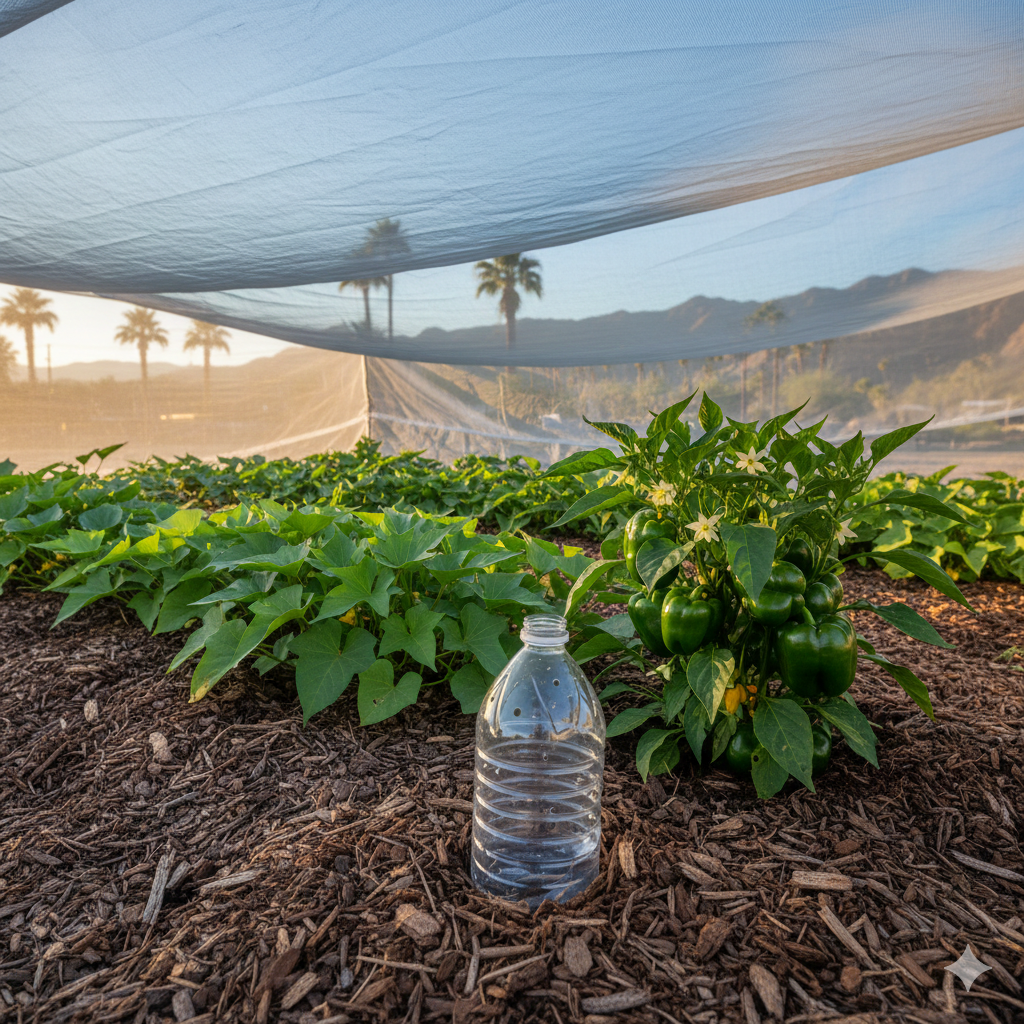
- The Solution: Use what you have. Position taller, heat-hardy plants (like okra or sunflowers) to the south/west of delicate plants to provide “living shade.” * Zero-Cost Hack: Upcycle old white bedsheets or mesh laundry bags as temporary shade covers during heatwaves.
2. Deep Mulching (The Sponge Method)
Evaporation is the silent killer. Bare soil in Texas or Florida can reach temperatures over 100°F, cooking beneficial microbes and roots.
- The Solution: Maintain a 3-to-4-inch layer of organic mulch. This regulates soil temperature and keeps moisture locked in.
- Zero-Cost Hack: Use dried grass clippings (pesticide-free), fallen leaves, or even shredded cardboard.
3. Smart Watering: Deep and Early
Frequent, light watering encourages shallow roots that fry the moment the sun hits.
- The Solution: Water at the base of the plant before 8:00 AM. This allows the plant to hydrate before the peak heat and ensures the leaves stay dry to prevent fungal issues in high-humidity zones.
- Zero-Cost Hack: Bury an old plastic water bottle with tiny holes poked in the bottom next to your thirstiest plants. Fill the bottle; it will slow-release water directly to the root zone (Deep Pipe Irrigation).
4. Selective Seasonality
Stop fighting the climate. In the Sun Belt, “mid-summer” is actually a dormant period for many traditional vegetables.
- The Solution: Plant for two distinct seasons: a long spring and a long fall. When the heat hits 95°F (35°C), let the garden rest or switch to heat-lovers like sweet potatoes, peppers, and cowpeas.
The Bottom Line: Work With the Sun, Not Against It
Successful gardening in the Sun Belt is less about constant intervention and more about strategic timing.
By shifting your focus from fighting the heat to protecting your soil and choosing the right windows for growth, you can maintain a productive garden without an expensive irrigation system or specialized equipment.
Remember, the goal in these regions isn’t just to keep plants alive—it’s to preserve the soil’s biology.
A well-mulched, morning-watered garden creates its own microclimate, allowing your plants to thrive while the rest of the landscape goes dormant.
Start small, use the resources already in your yard, and let the natural cycle of the South work in your favor.

Leave a Reply