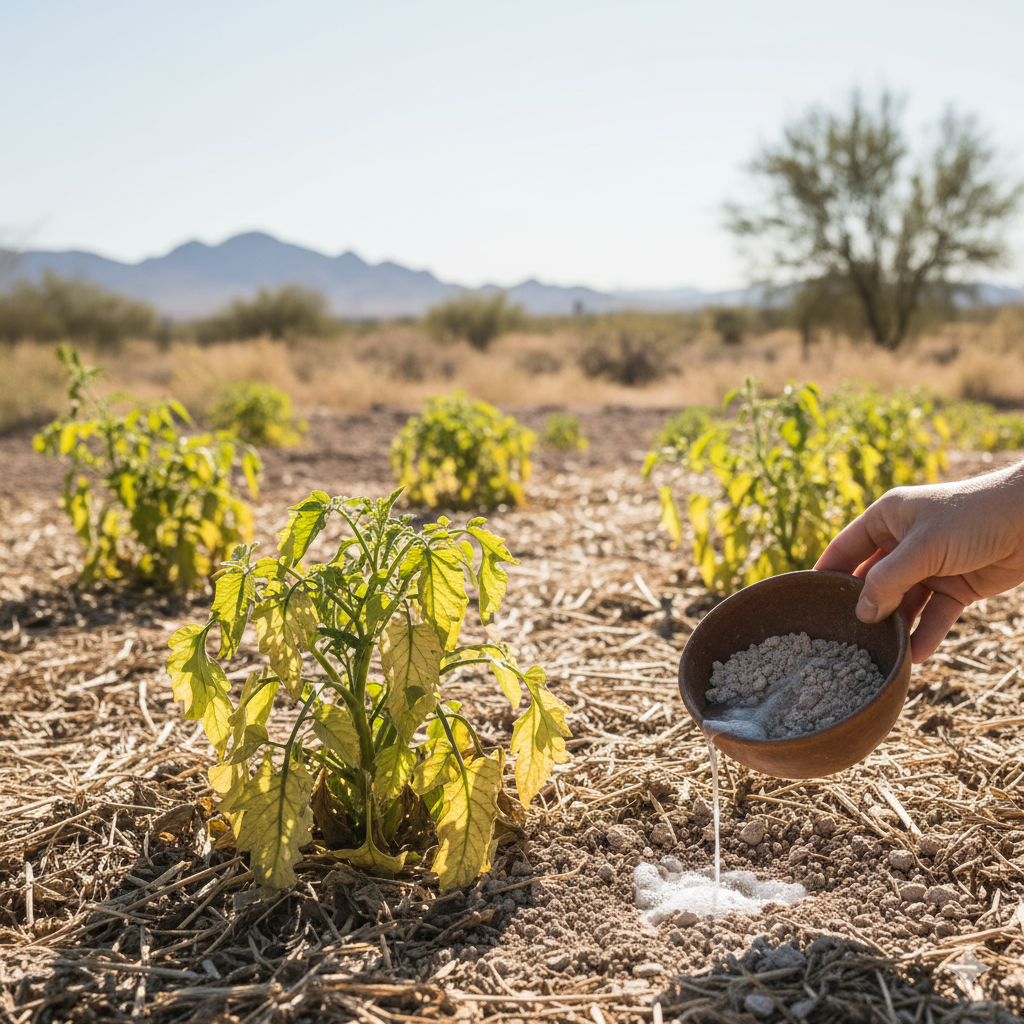
You’ve watered, fertilized, and protected your plants from the sun, yet they’re still yellow and struggling. The culprit might be an invisible problem: nutrient lockout caused by high soil alkalinity, a common issue in many Sun Belt states. Here’s how to diagnose and fix it without breaking the bank.
1. Test Your Soil (The Fizz Test)
Forget expensive kits initially. A simple DIY test reveals if your soil is highly alkaline.
- The Problem: High pH soil (above 7.0) makes essential nutrients like iron, phosphorus, and zinc unavailable to plants, even if they’re present in the soil.
- The Solution: Take a small scoop of dry garden soil. Pour a few drops of household white vinegar on it. If it fizzes or bubbles vigorously, your soil is highly alkaline (calcareous).
2. Recognize Iron Chlorosis (The Yellow Leaf Clue)
One of the most common signs of nutrient lockout is iron deficiency.
- The Problem: Plants can’t access iron, crucial for chlorophyll production.
- The Solution: Look for interveinal chlorosis: leaves turn yellow, but the veins remain distinctly green. This is a classic symptom of high pH preventing iron uptake, not necessarily a lack of iron in the soil itself.
3. Combat Hard Water’s Impact
Many Sun Belt regions, especially in the Southwest, have “hard water” rich in minerals like calcium.
- The Problem: Every time you water, you’re depositing more alkaline minerals, slowly increasing your soil’s pH and worsening lockout over time.
- The Solution: For potted plants or small beds, collect rainwater or use distilled water occasionally. For larger areas, consider deep, infrequent watering to minimize mineral buildup at the surface.
4. Acidify Sustainably: Forget Coffee Grounds Alone
While coffee grounds and pine needles add some acidity, they break down slowly and require massive quantities to meaningfully shift pH.
- The Problem: Relying on small amounts of organic matter for pH adjustment is often ineffective.
- The Solution: For a lasting, low-cost change, incorporate elemental sulfur into your soil (follow package directions carefully; a little goes a long way). Alternatively, a thick, annual layer of compost (especially mushroom compost or composted pine bark) will slowly and safely lower pH over time while improving soil structure.
5. Embrace “Calciphiles” (Plants That Love Lime)
Sometimes the easiest solution is to choose plants that thrive in your native conditions.
- The Problem: Forcing acid-loving plants like blueberries or camellias into alkaline soil is an uphill battle.
- The Solution: Opt for species that naturally tolerate or even prefer higher pH. Excellent choices for Sun Belt alkaline soils include lavender, rosemary, salvia, bougainvillea, okra, and some varieties of peppers and tomatoes.
Conclusion: Soil Chemistry is Your Friend
Understanding your soil’s pH is a game-changer for Sun Belt gardeners. Instead of guessing, a quick fizz test can reveal the root of many plant struggles. By making simple adjustments like targeted acidification and smart plant choices, you can unlock your soil’s potential and cultivate a thriving, vibrant garden with minimal expense.

Leave a Reply