
It takes a hard shove to free the greenhouse door from the grip of overnight frost. It opens suddenly, with a clatter. Inside, it’s quiet enough to hear a mouse’s footfall, which was what I thought might be the source of the rustling, down among the stacked clay flower pots.
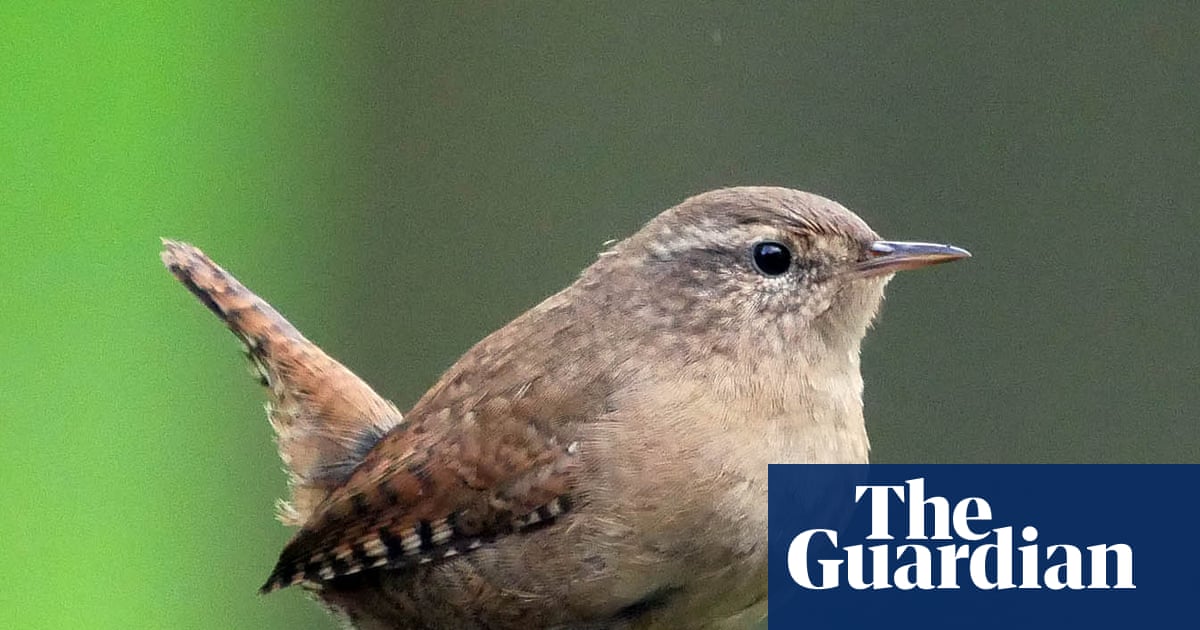
Then a wren – rotund body, perky cocked tail – appears, hops along the bench and disappears into a pot of violas. It must have been roosting in here for a couple of weeks, judging by the pile of droppings. It reappears, we eye each other for a few moments, then, with a whirr of stubby wings, it flies out through the gap in a broken pane of glass, something I’d meant to repair last autumn but will now leave until spring.
This rickety old greenhouse, with glass that never fitted after an overhanging branch fell in a gale and bent the frame, will be a winter roost for a bird whose portrait appeared on farthings, our smallest unit of pre-decimal coinage in my childhood pocket money.
Wrens are said to be our commonest breeding bird, hard to credit when they seem so solitary and unobtrusive. But whenever I’m working in the garden there’s usually one nearby, fossicking under hedges or in woodpiles. It’s in spring, when they perch on the hedge top and let rip with an explosive courtship song, delivered with such gusto that their whole being seems to vibrate, that they really make their presence felt.
December’s short days are a low point in the gardening year. It’s too cold to linger in the greenhouse, so just a quick look around now, to remove a few dead leaves and collect used plant labels, reminders of last year’s successes and failures.
Tangles of ivy-leaved toadflax and withered Welsh poppies that have run to seed behind the benches can stay until spring; pots laced with spiders’ webs can remain undisturbed. I’ll leave the wren’s roost in peace, until the days lengthen and it’s time to sow sweet peas again.
The door judders and squeaks on its runners as I slide it closed. On my way back up the garden path, there is the wren, once again pecking among frost-covered mosses.