
By Rosanna Spence | Published – 28 Jun 2023 | Updated – 4 Oct 2024
Ambling along a garden path is one of life’s simple pleasures. When you can’t quite see where the path is taking you, the experience becomes an adventure.
That’s the magic of a long and narrow garden: it invites you to keep exploring.
But if your slender plot leaves you feeling more claustrophobic than curious, then our long and narrow garden ideas will help you create a sense of enchantment.
Top garden experts have told us how they make the most of these quirky outside spaces, with designs including water features, pergolas and planting that can all help you see your patch in a whole new light.
1. Install ‘see-through’ structures
Pergolas give you a glimpse of the garden
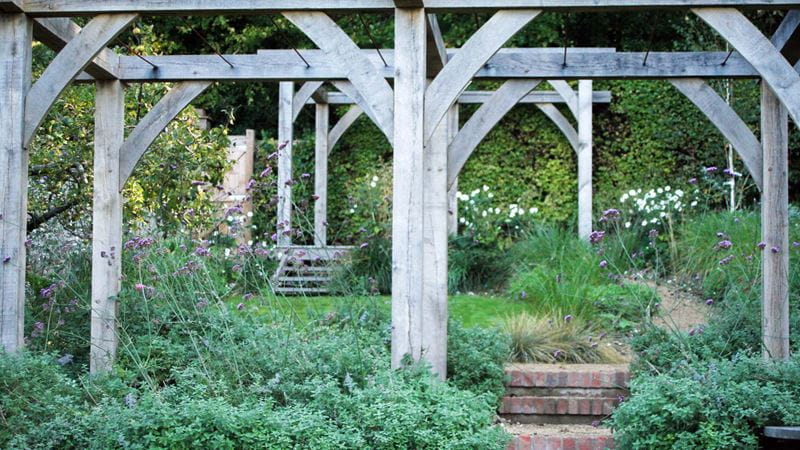
Image credit: Amanda Patton Landscape & Garden Design
“With long thin gardens, your eye has a tendency to rush to the end, making it feel even longer and thinner,” says landscaper and garden designer Amanda Patton.
“Creating layers and features that move across the width of the garden, allowing you glimpses of what lies beyond without revealing everything, will make the space much more comfortable and interesting. See-though features, such as pergolas, are ideal to create these layers.”
Patton’s long and narrow garden idea uses a series of pergolas to help guide our eyes around the garden, rather than straight through it.
Pergolas are also great supports for climbing plants – such as clematis and honeysuckle. Their striking flowers and scent add sensory garden features, providing more opportunities to enjoy mindful moments.
2. Plant in opaque layers
Pair grasses with perennials
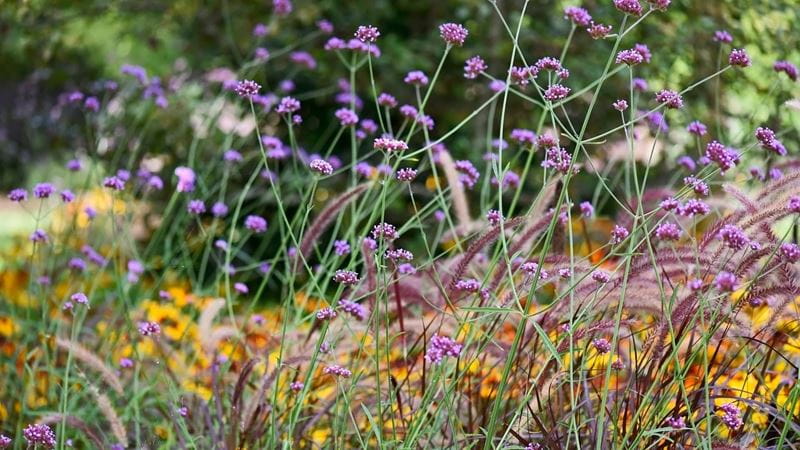
Image credit: Shutterstock / Lana B
Another way to achieve Patton’s long and narrow garden idea of opaque layers is by planting. Overlapping delicate textures will – much like a pergola – help to draw the eye around the garden and add interest without being overbearing.
“Try grasses, such as Deschampsia cespitosa, Stipa gigantea or Molinia ‘Transparent’,” suggests Patton.
“Plant them with perennials, such as Oenothera lindheimeri (also known as gaura), Cephalaria gigantea or Verbena bonariensis. Plant these beneath a backbone of lightweight shrubs or small multi-stemmed trees where the crown has been lifted. Amelanchier lamarckii is a fabulous choice with spring blossom and great autumn colour as a bonus.”
3. Add a reflective sculpture
Play with space and reward a journey
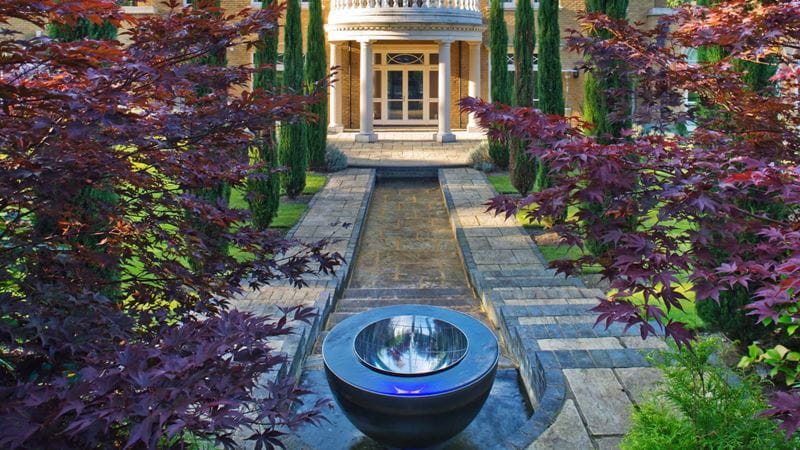
Image credit: David Harber
Adding an artistic focal point is a useful long and narrow garden idea, which also works for sloping gardens and tiered gardens. This is because when placed among certain plants, additions like a sculpture can transform a space and have an illusionary effect.
“Adding a tall sculpture can encourage the eye to look up, for example, creating the illusion of a taller garden,” says sculptor David Harber.
“If you choose to nestle a smaller sculpture within flowers or shrubbery, this can create interest between the beds, inviting guests to explore space they may not otherwise have noticed. Another option is to set a sculpture against the hedge or fence, ideally a piece with a reflective surface.”
As shown in his design here, a reflective surface can help to inject light into a long and narrow garden. As journeying through this type of garden feels natural, placing a sculpture at the far end will reward you for your efforts.
4. Add a secret love seat
Tuck it away at the far end of the garden
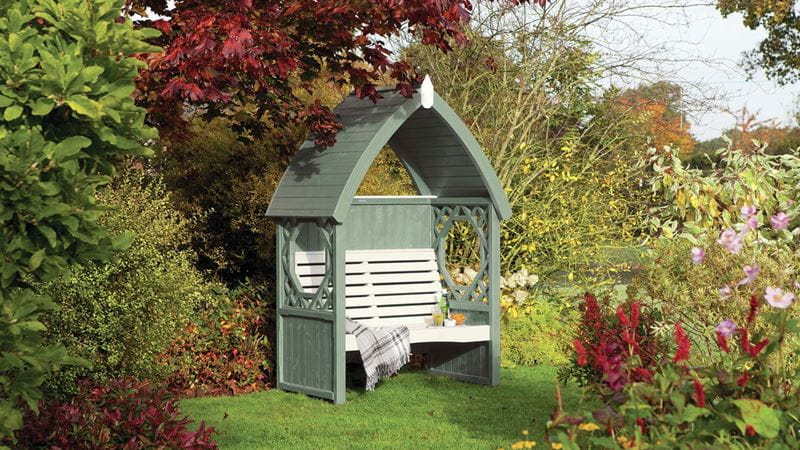
Image credit: Cuckooland
Sometimes you just want to get away from it all. But rather than heading for the airport, why not head to the end of your long and narrow garden instead?
Secluded garden seating, like this covered love seat from Cuckooland, can create a snuggly reading nook in an instant. Choosing a seat that offers some protection from wind and rain will mean you’re more likely to get use out of it throughout the year, too.
5. Opt for slimline storage
Don’t let your shed steal valuable floorspace
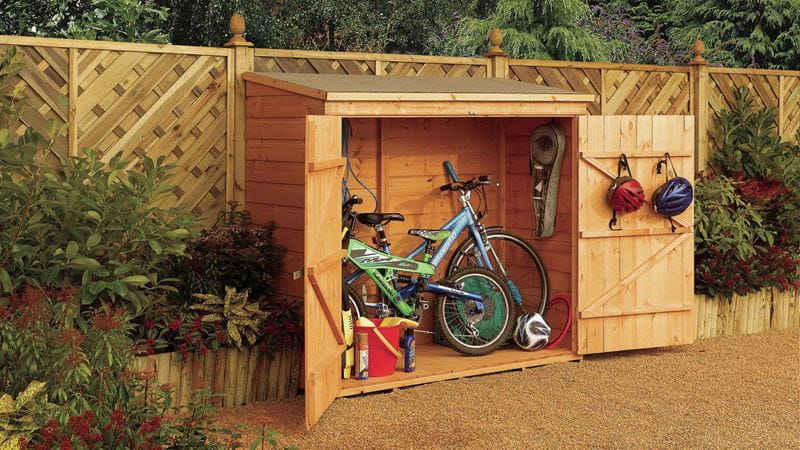
Image credit: Cuckooland
Even long and narrow gardens need storage solutions. Some people may prefer to pop a shed at the very end of the garden. But what if you don’t want to make the trek each time, or would rather store valuable items a bit closer to your house?
A slimline shed, like this one from Cuckooland, can be installed at any point along the side boundary walls or fences. It doesn’t impose too much on usable floorspace, meaning you can easily get past it to access other areas of the garden.
This shed has been installed in a raised bed garden, with the depth of the structure matching that of the plant beds. The storage sits flush with the planting scheme, resulting in a smart finish.
6. Plant deep borders
Create a cottage garden
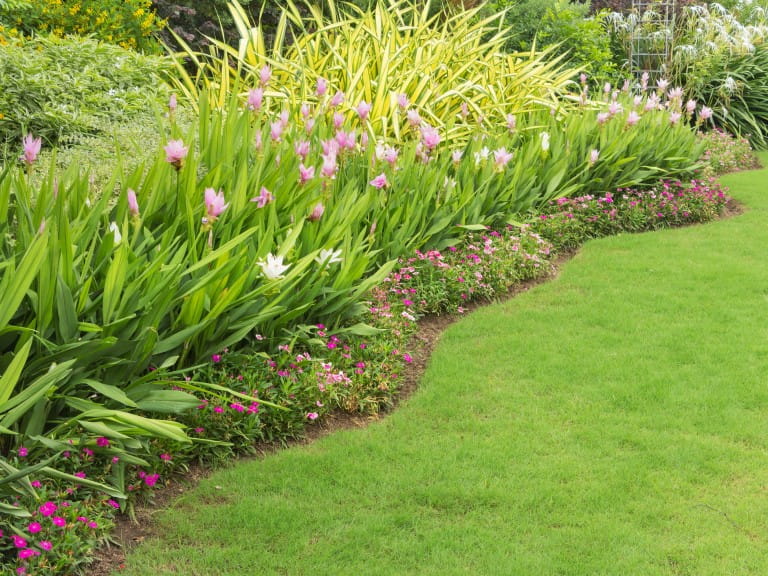
Image credit: GettyImages/Chaloemphan
If you’d rather tend flowerbeds than mow a lawn, then you’re in luck. One of our favourite long and narrow garden ideas is a simple one. But the results are gorgeous.
A central pathway flanked by deep, abundantly filled flowerbeds can help to create the cottage garden of your dreams. And it doesn’t have to be too complicated either. There are plenty of low-maintenance border plants to choose from, including alliums and hardy geraniums.
These plants will give you bountiful blooms for minimal effort. If you don’t know what to do with alliums after they finish flowering, for example, then you’ll be pleased to hear you can leave them be and let them ‘do their thing’. Leaving you with plenty of time to relax and read a book.
7. Disguise the boundaries
“Feeling fenced in isn’t nice”
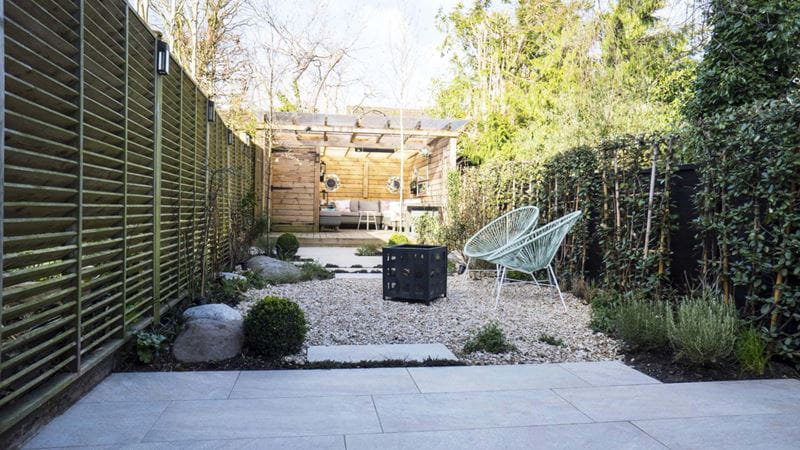
Image credit: Karl Harrison Landscapes
Wave goodbye to any feelings of claustrophobia in your long and narrow garden, and welcome in more foliage. Concealing some or all of your garden fencing with plants can help to maximise your biophilia while minimising harsh boundaries – like this design from Karl Harrison Landscapes.
“Feeling fenced in isn’t nice, so clad fences with greenery by adding climbers,” says Sam Proctor, founder of Chiltern Garden Design.
“You’ll need to add supports for most climbers, except for Virginia creeper, climbing hydrangeas and varieties of ivy, which have self-clinging suckers. Use the verticals for planting to save space and add taller plants on the boundaries to break up the fence line, and block unsightly views, creating more privacy too.”
8. Widen the garden with mirrors
Conjure other worlds in a reflection

Image credit: Cox & Cox
Mirrors are a popular solution for creating more space. But don’t just think of them as interior accessories. They’re ideal for a small garden, or any outside area you want to transform without so much as a trowel.
For a long and narrow garden idea, you can use them to widen your space, reflecting the skyline and plants. This mirror from Cox & Cox looks like an ornate window, inviting you to gaze into a whole other world.
“You can even buy ‘mirror gates’,” explains Proctor.
“These can be attached to a wall or fence, surrounded by soft greenery, to give the illusion that there is another part of the garden to be explored, just beyond.”
Mirrors can confuse birds
Be aware that reflective surfaces in the garden, such as decorative mirrors, can be dangerous for birds. They may fly into mirrors – as they do so often with windows – believing the reflecting is a continuation of their habitat.
There’s a quick safety tip that could save millions of British birds though, which is to add bird-friendly decals (usually stickers) to any garden mirror you install. This will help them recognise that it’s a surface and not space to fly into.
9. Divide the garden into rooms
Plants can climb around archway ‘doors’
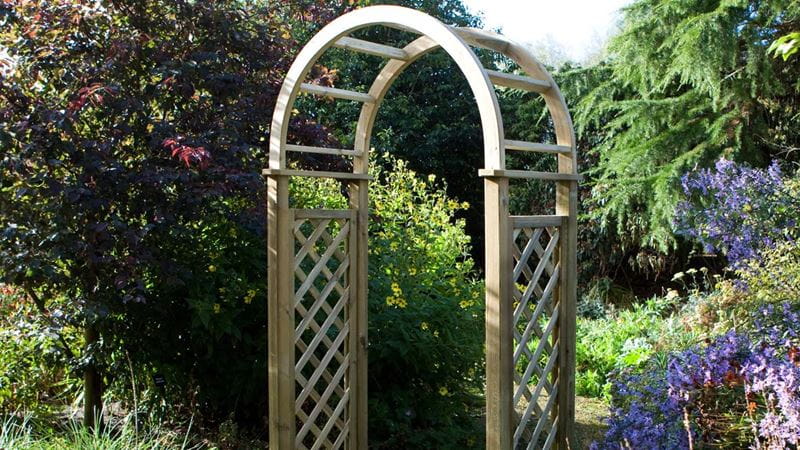
Image credit: B&Q
One advantage is that long and narrow gardens are, well, long. That means you have the space to create different areas, which could have different planting themes, colour schemes or uses.
“Divide the space into separate ‘rooms’ so you can’t see the whole space at once,” says Proctor, who explains this trick can not only create intrigue, but can encourage people to explore the full length of the garden in every season.
“Each room can have a different feel. For example, a narrow winding path through effusive cottage planting gives an immersive feel. But if you then pass through a wisteria-clad archway into a wider open, seating area with a bubbling water feature, there’s then room to breathe and relax without feeling quite so hemmed in.
“Work the transitions – archways, gaps in hedging, and gates are great ways to break up the spatial divisions and enhance the feeling of passing from one discrete room into another.”
10. Introduce the sounds of water
Mute noise from your neighbours
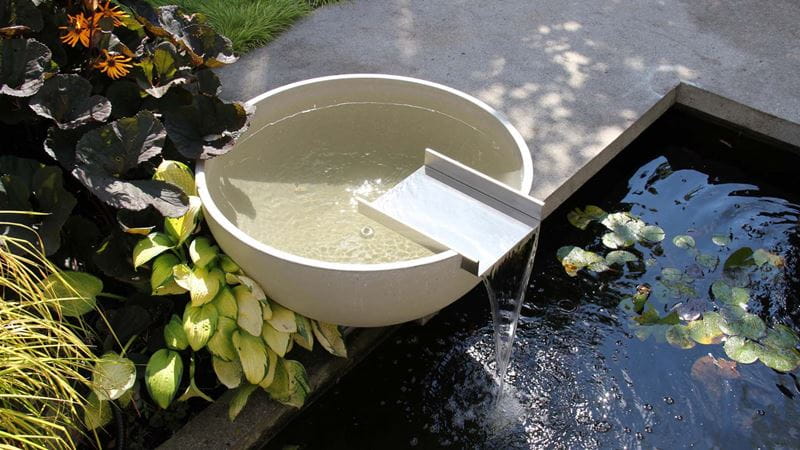
Image credit: Solus Decor
If you have a long and narrow garden, it may be that your house is terraced. You’ll likely be surrounded by lots of life from the people living in your vicinity. It’s important to create calming oasis and water can help.
“Narrow gardens are often enjoyed cheek-by-jowl with neighbours,” says Proctor.
“A trickling water feature can help mask unwanted sounds and add a sense of serenity in your own garden.
“My first garden was very long and narrow but featured a huge pond that extended across its full width, with a Chinese bridge crossing it and a trickling waterfall creating a restful, splashing soundtrack. It was possible to feel like I’d really got away from it all, just a few steps from the back door.”
You may not have space for a whole pond, but a water feature of any size can still introduce calming trickling or bubbling sounds.
11. Ensure continuity across sections
Paving and hedging can tie garden design together
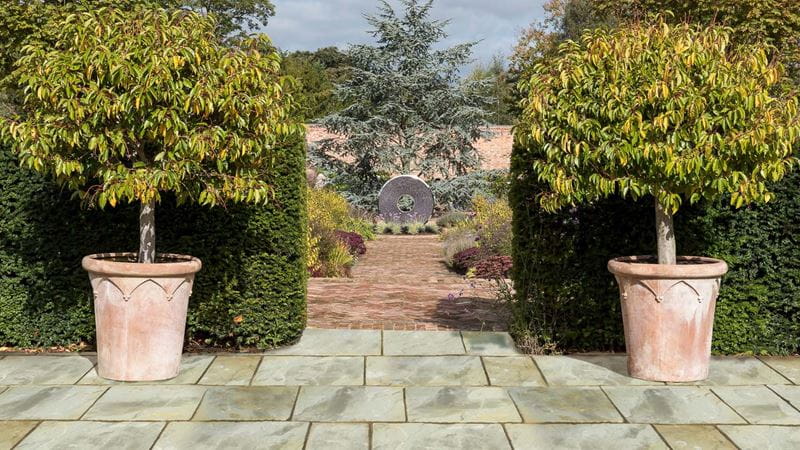
Image credit: Artisans of Devizes
Though creating different rooms or sections is a great long and narrow garden idea, there are ways you can keep things feeling cohesive with flooring and hedging.
“With separate schemes in separate rooms you can go all out with the planting, showcasing different colours or styles within each without it clashing,” says Proctor.
“However, try to retain one key element that carries across the spaces, to give a sense of harmony and continuity – a gravel path, Yorkstone pavers or yew hedging are all classic examples of how to create unity across different zones in a long garden.”
12. Line the space with potted plants
Add a splash of colour with a central rug
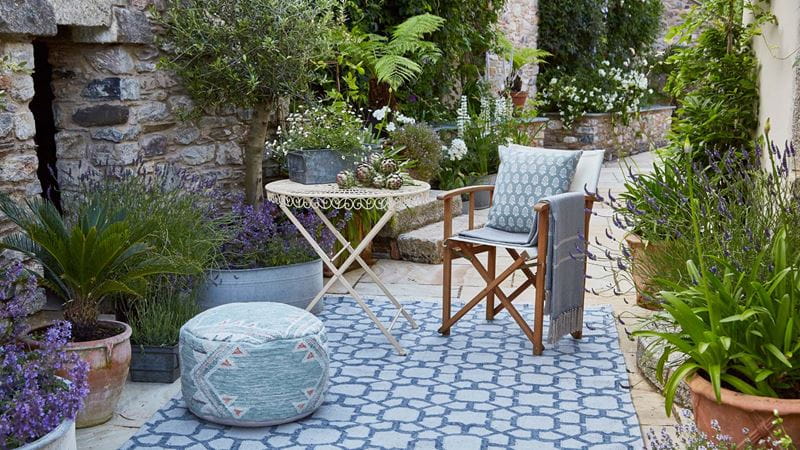
Image credit: Weaver Green
Are you a fickle gardener? If you can never quite decide how you want your long and narrow garden to look, then planting in pots and containers means you can move things around on a whim.
Potted plants have a small footprint and can be grouped together in various sizes for a pleasing display. From tiny forget-me-nots to towering fruit trees, not planting in the ground doesn’t mean your garden will be restricted.
This long and narrow garden idea brightens up the central, clear space with an outdoor rug and foldable bistro set. Both can be quickly cleared away easily, allowing you to enjoy as much floor space as possible.