
In his weekly Jamie’s Little Allotment column, Jamie Marsh talks veg…
Another week has passed since I was talking about the driest spring I can ever remember. Non-gardeners will love the constant sunshine and above-average temperatures, but the subject I’m going to talk about today needs plenty of water regularly, especially if it’s abnormally sunny.
Now the risk of frost has passed, the allotment activities are in full swing, which means seed sowing has reached its peak for the veg growing year.


The majority of the beds out on the plot are empty, I’ve topped them up with some lovely compost and kept on top of hoeing the weeds, so I’m ready to start the almost magical process of growing my own veggies for this year.
There’s two ways you can get your seeds into the ground where you want to grow your food. Firstly, there’s direct sowing, then sowing in modules and trays in the greenhouse.
Direct sowing is what I can remember doing with my dad when I was a boy. After double-digging the whole front garden and adding in manure, which he had collected in sacks, he would rake and rake until the soil had a crumbly tilth.

I don’t direct sow straight into the beds as I get poor germination rates. Carrots and parsnips are the main ones I will always sow straight into the ground, and I use a quite conventional way of doing it until the end.
Drill sowing is the most common way to direct sow into the allotment bed, and the one I use most.
I simply use a string line pulled tight across the bed, or a plank of wood placed where you want your drill, then by drawing either the corner of a hoe or even just a bamboo cane, along the string line or beside the plank to make a small shallow trough or drill in the soil ready to sow your seeds in.
The depths and spacings you need will be printed on the back of the seed packet so follow those quite closely as it’s very important to think about how big the plants will be when they are full size and the space they will need to grow without any competition from another plant.
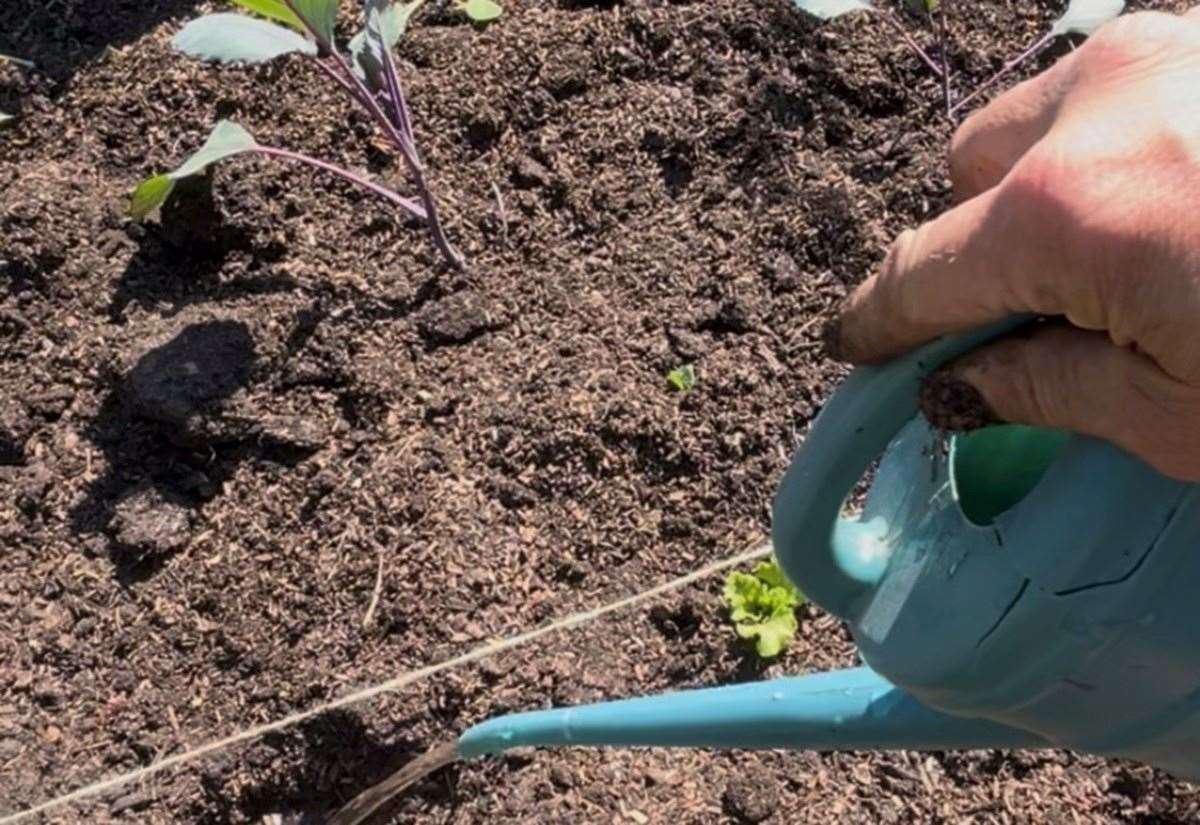
Once I’ve pulled my drill into the soil, I will moisten the bottom of the trench with the watering can, then sow the seeds and cover over with the soil.
Now for the non-conventional part. Parsnip seed is really flat and almost paper like, and it dries out so fast – if a seed dries out once it’s started to germinate, it’s curtains, so what I do to stop this is, once the drill has been back filled with soil or compost, I give it a real good soaking, then place a plank of wood over the whole length of it. This will keep the sun from getting to the soil and drying it out.
Parsnips can take up to three weeks to germinate, so don’t give up, check under the board every few days to make sure it’s still damp and as soon as you see the first seedling emerge, remove it.
I do this for carrots as well, but the other seeds I sow direct are beetroot and radishes, which can be done in a drill exactly the same.
The other way I use for the majority of seeds is to sow them in either trays, pots or cells. Doing it this way, you can either buy special seed compost which is lovely and fine, or you can sieve your own compost or topsoil to make your own.
Once again, follow the seed packet for spacing. Once the seedlings have a set of true leaves, you can prick them out and pot them on, or plant them straight out into their final growing space.
When I plant my seedlings out, I like to puddle them in, especially when it’s been really hot and dry. Puddling in just means to fill the hole you’re popping the plant in with water, so it has a good drink to get started. Don’t forget your spacing at this point, because if they are too close to each other, you will get smaller and weaker vegetable plants.
As always, you can email me and let me know what you’re up to in the garden on jamieslittleallotment@gmail.com, and you can also follow me on Instagram: @jamies_little_allotment