
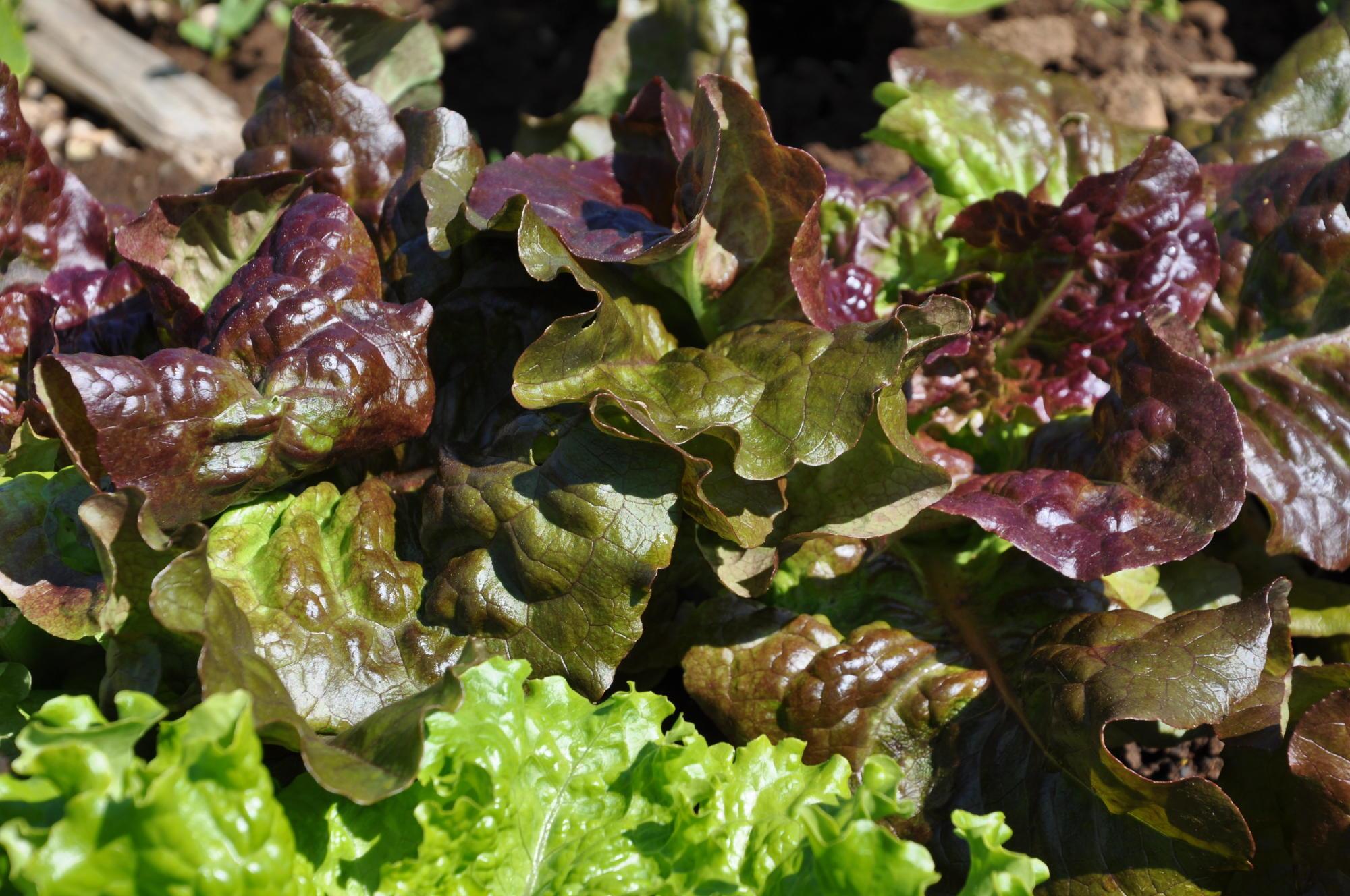
The coastal climate of Oregon offers both opportunities and challenges for home vegetable gardeners. Mild temperatures, ample rainfall and cool summers support many crops, especially those that thrive in cooler conditions. Wind, fog and limited sunlight mean variety selection and protection are important.
Root crops
All root crops do well in the coastal climate, preferring loose, deep soil. They need high potassium fertilizer and careful thinning of seedlings.
Carrots
All varieties perform well, but note mature root length. Shorter varieties are better suited to heavier soil. ‘Sugarsnax 54’ and ‘Candysnax’ are sweet, tender and 9–10 inches long. Require regular and ample water. Must be direct seeded.
Beets
All beets grow well. ‘Cylindra’ and ‘Forono’ produce 6–8 inch roots. ‘Touchstone Gold’ and ‘Boldor’ are sweet golden beets; ‘Chioggia’ is a striped Italian heirloom. Tops are excellent in salads or sautéed dishes. Beets require boron; use fertilizer with micronutrients.
Radishes
All standard types do very well. Thin seedlings to allow room for larger roots. Specialty radishes, including some Asian varieties, may have specific seasonal planting needs. Consult seed catalogs. Must be direct seeded.
Other root crops
Turnips and rutabagas are good possibilities. Beets can be started indoors and transplanted carefully at the first or second true leaf.
Brassica family (cole crops)
Broccoli, cabbage, cauliflower, kale, kohlrabi and Brussels sprouts should be started indoors and transplanted outside after the last frost. Brassica transplants do not tolerate cold soil well. All cole crops should be monitored for aphids, slugs and cabbage worms. Daytime wilting may indicate root maggots.
Broccoli
‘Belstar’ is organic, cold hardy and compact, producing a large main head and many side shoots. ‘Gemini’, ‘Arcadia’ and ‘Marathon’ are good winter-hardy varieties. Tall sprouting types are also good choices.
Cabbage
Proven varieties include ‘Katarina’, ‘Alcosa’, ‘Caraflex’, ‘Ruby Perfection’ and ‘Integro’.
Cauliflower
‘Snow Crown’ is early and nearly foolproof. ‘Cheddar’ and ‘Graffiti’ are brightly colored. Cauliflower may not mature properly if plants are too large at transplanting or experience temperature extremes when small.
Kale
All varieties grow well. ‘Wild Garden’, ‘Red Russian’ and ‘Redbor’ are good choices. ‘Toscano’ is especially sweet. Ornamental kales are edible.
Kohlrabi
Good varieties include ‘Terek’, ‘Kolibri’ (purple) and ‘Gigante’.
Brussels sprouts
Plant in early summer for fall harvest. Remove leaves between sprouts. Consider ‘Churchill’ and ‘Franklin’.
Cucumbers
Pickling, slicing and seedless cucumbers perform better with protection. Plants require warm soil for germination. Unless labeled parthenocarpic, cucumbers require pollination by insects.
‘Lemon’ cucumbers are popular for eating or pickling.
Parthenocarpic varieties that require no pollination include ‘Mini Me’, ‘Mini Munch’, ‘Sweet Success’, ‘Diva’ and ‘Agnes’.
Greenhouse and English types include ‘Pepinex’ and ‘Socrates’.
Green beans
Bean seeds require warm soil to germinate. They can be started indoors in pots and transplanted carefully after the last frost. Dark-colored bean seeds germinate better in cool soil.
Bush beans
‘Provider’, ‘Jade’, ‘Derby’, ‘Oregon 54’, ‘Maxibel’ (green), ‘Rocdor’ (yellow) and ‘Jumbo’ (Italian flat).
Pole beans
Require trellising and are more productive but less wind tolerant. ‘Helda’ (Italian flat) is a good option.
Lettuce and leafy greens
Hundreds of lettuce varieties grow well in coastal conditions. Look for slow-bolting varieties with tip burn resistance.
Lettuce varieties
‘Winter Density’, ‘Truchas’, ‘Cherokee’, ‘Coastal Star’, ‘Little Gem’, ‘Bambi’, ‘Merlot’, ‘Buttercrunch’, ‘Red Cross’, ‘Continuity’, ‘Jester’, ‘Oscarde’ and ‘Rouxai’.
Mesclun or baby-leaf mixes provide a range of textures and colors.
Spinach, endive, frisée and escarole grow well in cool seasons.
Chard
Performs especially well. Varieties include ‘Bright Lights’, ‘Ruby Red’, ‘Neon’ and ‘Golden Sunrise’.
Arugula, mustards and microgreens
These crops tend to bolt quickly. Direct seed and replant often. Microgreens are easiest using kale, mustards and radishes.
Asian, Italian and specialty greens are generally easy to grow, though some have seasonal requirements. In windy or exposed locations, cloches help produce tender greens.
Onions, leeks and shallots
Green onions, bulb onions, shallots and leeks perform very well when started from seed. Start seeds in February for June planting.
Bulb onions
‘Expression’, ‘Candy’, ‘Sierra Blanca’, ‘Red Wing’ and ‘Ailsa Craig Exhibition’.
Green onions and scallions are specialized types and do not form bulbs.
Shallots
‘Conservor’ and ‘Ambition’.
Leeks
‘Megaton’, ‘Lincoln’, ‘King Richard’ and ‘Lancelot’.
Peas
Bush varieties tolerate wind better than tall types. Many Oregon-named varieties were developed at OSU for disease resistance.
Sugar pod peas
‘Oregon Sugar Pod II’, ‘Oregon Giant’ and ‘Sugar Daddy’.
Snap peas
‘Cascadia’ and ‘Sugar Sprint’.
Shelling peas
‘Oregon Trail’.
Peppers
Peppers require substantial protection, sun and heat. Hot peppers generally ripen more reliably than large sweet varieties. Choose short-season, early-maturing sweet varieties and use cloches or greenhouses when possible.
Mini sweet peppers that perform well include ‘Lunchbox Mix’, ‘Sweet Lemon’, ‘Sweet Orange’ and ‘Sweet Ruby Delite’.
Potatoes
All potatoes perform well in the coastal climate. Seed potatoes are available at garden stores in March. After mid-April, use catalog vendors.
Fingerlings
‘French Fingerling’, ‘Rose Finn Apple’ and ‘LaRatte’.
Yellow-fleshed
‘Yukon Gold’, ‘Red Gold’, ‘German Butterball’ and ‘Yellow Finn’.
Blue-fleshed
‘Purple Majesty’ and ‘All Blue’.
White-fleshed
‘Purple Viking’, ‘Red LaSoda’, ‘Red Norland’, ‘Kennebec’ and ‘Red Pontiac’.
Summer squash
Summer squash grows very well. Planting two plants improves pollination.
Coastal favorites include ‘Sure Thing Hybrid’ and ‘Cavili’, which are parthenocarpic and set fruit without pollination.
Zucchini varieties include ‘Easy Pick Gold’, ‘Cocozelle’, ‘Fordhook’, ‘Gold Rush’ and ‘Gold Mine’.
Yellow crookneck varieties include ‘Horn of Plenty’ and ‘Summerpac’.
Scallop varieties include ‘Sunburst’ and ‘Peter Pan’.
Winter squash and pumpkins
These crops require a long season, good pollination and warmth. Choose varieties that mature in under 90 days for coastal gardens.
‘Honey Bear’ bush acorn performs well near the coast with protection. ‘Sunshine’ and ‘Sweet Meat’ are very sweet and do better inland. Butternut squash is a different species and does not cross-pollinate with other winter squash.
Tomatoes
Tomatoes require protection and the sunniest available location. Cherry and grape types ripen earliest. Choose the earliest-maturing varieties.
Determinate (DET) and dwarf varieties are best for cloches. Indeterminate (IND) varieties require staking or caging and may grow quite tall. Large-fruited heirlooms may not ripen reliably.
All tomatoes require consistent water and good nutrition to prevent blossom end rot. Containers must be large enough to support mature plants.
Garlic
Garlic is easy to grow and is propagated from cloves.
Softneck garlic has many small cloves and is commonly found in grocery stores. Hardneck garlic produces fewer, larger cloves and sends up a stiff central stalk. Remove stalks after one curl to encourage bulb growth; stalks are edible.
Plant in October on 5-inch centers. Garlic prefers sun, loose well-limed soil and moderate fertility. Mulch to control weeds. Stop watering after June 1.
Harvest when about half the leaves yellow. Cure bulbs with leaves attached for about one month, then trim tops and roots. Store around 60°F in a dark, dry place. Refrigeration breaks dormancy. Save the largest cloves for planting.
Odds, ends and slightly fussy vegetables
Celery
Grows very well with high nitrogen and ample water. ‘Tango’ is a good variety. Protect from slugs.
Bulb fennel
‘Orion’ and ‘Orazio’ are easy to grow and quick to produce large bulbs.
Corn
Requires a long, warm season. Suitable inland with early varieties of 75–80 days or less. ‘Luscious’ is a possible organic bi-color.
Tomatillos
Similar requirements to tomatoes, with a large sprawling habit and significant space needs.
Eggplant
Difficult in maritime climates due to heat requirements. A very warm, sunny location may succeed.
Perennial vegetables
Artichokes
Well suited to the coastal climate but require space, sun and excellent drainage. Protect with mulch in winter. ‘Green Globe’ is a good variety. Monitor for aphids and earwigs.
Asparagus
A long-lived perennial that requires space and slug protection. Can be grown from crowns or seed. Harvest lightly after 2–3 years for about six weeks, then allow growth to support future crops.
Jerusalem artichoke (sunchoke)
A tuber-producing perennial sunflower native to eastern North America. Grows 5–9 feet tall and can be invasive. Best grown in large containers or contained spaces. Harvest tubers in fall. Produces small yellow sunflowers.