
Tropical plants add a lush, exotic touch to yards and container gardens. Not only can they can thrive in the Midwest, they can even be the stars of your garden with their striking foliage and bold colors. Some can be brought inside when the weather cools to cheer up your home or to overwinter as bulbs.
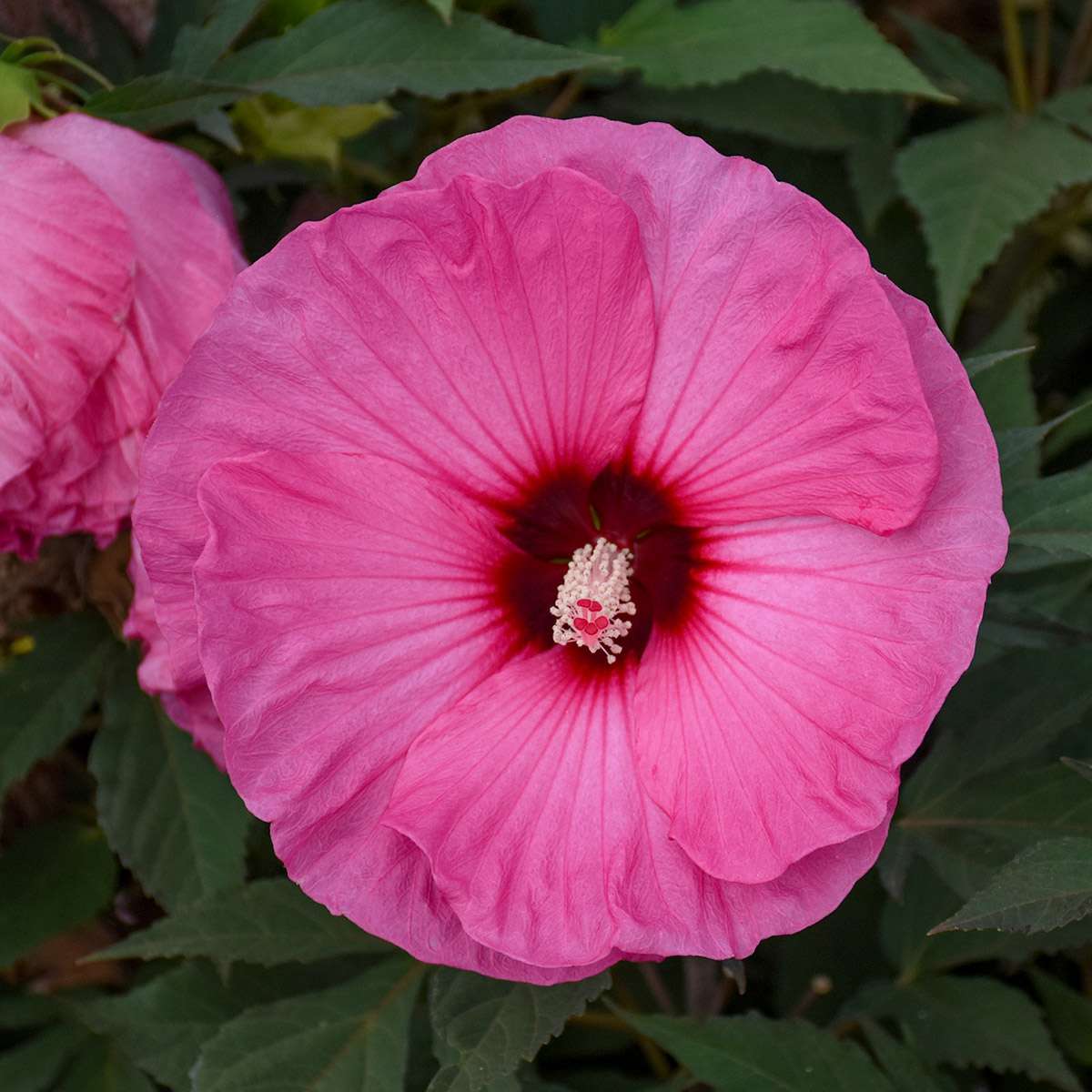
Hardy hibiscus
Courtesy of Walters Gardens, Inc.
Hibiscus moscheutos and Hibiscus laevis may look tropical with their dinner plate-sized blooms, yet they’re perennials hardy to -30F. The common name is rose mallow, and native species grow naturally in wetlands and along riverbanks throughout the Midwest. New hybrids feature pinwheel-like flowers in shades of white, pink, red, and yellow, with eye patterns and streaked petals. Their leaves vary in color from green to bronze and near-black. Try the Summerific series in ‘Candy Crush’ (pictured). To learn more, see ‘Year of the Hardy Hibiscus’ at the National Garden Bureau.
Canna Lily
Courtesy of Anthony Tesselaar Plants
Fill your potted arrangements with these easy-care tropical bulbs, prized for their lush foliage in bright green, bronze, dark purple and variegated. Check out the leaves’ stained-glass effect when backlit with sunlight. Cannas shoot up towering stalks with iris-like blooms in yellow, red, salmon, orange or pink in mid- to late-summer. They’re sun-lovers and make the perfect focal point or “thriller” for container designs. Try the Tropicanna series (pictured) in three different colors. At the end of the season, cannas can be dug up and overwintered.
Ti Plant
Courtesy of Costa Farms
Add a splash of flamboyant pink with sun-loving Cordyline plants, shown here in a container with Velour wave petunias. For centuries, Ti plants have been considered sacred by the Hawaiian people and are believed to bring good luck when planted around a home. Try ‘Red Sister’, ‘Black Mystique’ in dark purple or ‘Candy Cane’ in green streaked with white and pink.
Crotons
Courtesy of Costa Farms
Crotons (Codiaeum variegatum) offer eye-catching, textural foliage for container arrangements and borders. They hail from the tropics, so count on croton plants to hold up to hot, humid weather. They prefer sun but tolerate shade. In winter, they can be grown indoors as a houseplant; with their pretty shape, they double as sculptural art. Try the classic ‘Petra’ with leaves veined in red, orange and yellow. Other favorites include ‘Superstar’ with bright green leaves splashed in yellow and ‘Corkscrew’ with spiraled leaves.
Elephant Ear
Courtesy Missouri Botanical Garden PlantFinder
With large heart- and arrow-shaped leaves, elephant ears (Colocasia) add an instant jungle effect to a backyard. Try ‘Blue Hawaii’ (pictured) with blue-green leaves or ‘Mojito’ with green leaves mottled in dark purple. To make a Jurassic statement, try ‘Thailand Giant’ with four-foot leaves. Plant elephant ears in large containers in part sun; bring indoors in winter to grow as houseplants.
Hardy Banana Tree
Courtesy of Logee’s Plants for Home & Garden/logees.com
This tropical Rockstar (Musa basjoo) shows off in summer, dies back in fall, withstands sub-zero winter temperatures, then fabulously returns each season. Plant them in full sun in the landscape, keep soil consistently moist and feed weekly with a liquid fertilizer. To overwinter, cut to 24″ and pile on a layer of leaves or mulch. For details, see Groovy Plants Ranch in Ohio.
Pineapple Lily
Courtesy of Walters Gardens Inc.
This South African native (Eucomis) is called a pineapple lily for good reason—its flowers’ spiky tops look like tropical fruit. The lilies put on a show beginning in early summer, when the strappy olive-green leaves emerge. In late summer, cream flowers open and age to deep rosy purple. Plant bulbs in containers or sunny perennial bulbs. In winter, dig bulbs to store indoors, then replant them in spring.
Palm Leaf Begonias
This grouping likes a sunny wake-up call but appreciates afternoon shade. Golden creeping Jenny drapes over the edge of the pineapple-esque pot, and ‘Painted Paradise Red’ New Guinea impatiens add dark contrast in flower and leaf. Dramatic palm leaf begonias can be brought indoors as a houseplant at the end of the season.
Mandevilla
Courtesy of suntoryflowers.com
These tropical vines are loaded with nonstop trumpet-shaped blooms in red, pink, coral and white. Train the vines up a fence, trellis, arbor, bamboo poles or a lamppost. String up fishing line or twine as “helper lines.” The vines are not hardy in northern states, so they’re grown as annuals for one season. Try heirloom climbers like ‘Alice Dupont’ in pink or newer hybrids like Sundenia (pictured) with larger blooms and mounded forms, perfect for containers.
Fan Palm
A Chinese fan palm sways above variegated Alligator Tears coleus, chartreuse ‘Marguerite’ sweet potato vines, scarlet-blooming angel-wing begonias, and (tucked away) orange New Guinea impatiens. Potted palms can spend winters indoors by a sunny window and go outside when the weather warms up in late spring.
Coleus
Courtesy of Proven Winners
Known as the “Hawaiian Shirts” of the plant world, these annuals (Solenostemon scutellarioides) come in wildly colorful foliage. Try the ColorBlaze series including ‘Torch Light’ (pictured) or ‘Lime Time.’ They grow well in sun or shade. Pot a combination of them in containers or landscape beds. To maximize leaf growth, prune away flower spikes and fertilize every other week with a liquid fertilizer. Learn more about coleus at the National Garden Bureau.
Bromeliad
Courtesy of Costa Farms
These stylish houseplants also can be grown outdoors in summer to bring an exotic flair to patio containers. Their colorful, long-lasting blooms contrast beautifully against their strappy and often patterned leaves. Pot a couple varieties together or combine with ivy, creeping Jenny or sweet potato vine. After flowering, the parent plant dies, and new growth or “pups” emerge. Some bromeliads grow best in sun while others prefer shade. A few foliage favorites include Neoregelia spp. (pictured) and ‘Guacamole’ in green mottled with red. For colorful flowers, try Guzmania spp. or ‘Pink Quill.’
Bamboo Palm
You can definitely think big with bamboo palms—some varieties grow 3 to 8 feet tall! Here, bamboo palm underplanted with calibrochoa helps create upward movement and visual interest. Bamboo palms also make great indoor tropical plants.