
For years, I didn’t think of myself as a “real” farmer. Not until about two years after buying my first high tunnel. Within more than 100 acres of trees, gullies, and glades, we carved out 15 acres for a home, a few horses, and a garden.
Growing vegetables on a ridge has its challenges. Trees everywhere, shallow soil, rocky karst, and little to no flat land. Still, I grew vegetables for 17 years, tending multiple raised beds built from second-grade oak boards from a nearby Mennonite sawmill. The boards varied in length depending on what was available, and the width was 4 feet because that was as far as I could reach. I tucked beds wherever I could find six hours of sun. The watering system was a maze of hoses and Y-joints.
Outside Advice Grounded Me
After attending workshops, reading books, and going on farm tours, it became obvious that with a high tunnel, I could put all that in one place. I could save time, raise more, and maybe even prove that a lot of food could be grown in a small footprint in the middle of the woods.
There is no “perhaps” anymore.
We put up the first tunnel in 2017 and added another in 2021. It’s been an adventure ever since. I’ve learned a great deal about tunnel growing — lessons not found in books — and I’m still learning.
The number one lesson came from a Vermont high-tunnel grower: the land inside the tunnel is valuable. Every square foot that can be planted should be planted. Never use tunnel space for storage, no matter how tempting “just for now” might be. Don’t give in when friends or family suggest it. “Temporary” too often turns into “too long.”
Working with the Land, Not Against It
Because we’re surrounded by nature, I try to work with it rather than clear everything out. Many farmers strip the land bare around their tunnels, but I don’t. I mow and trim enough so I can repair the tunnel easily and make it riskier for wood rats, mice, voles, rabbits, groundhogs, raccoons, and possums to hang around. Open sightlines give hawks, foxes, and owls a chance at a meal.
Moles get a pass because they eat grubs, especially Japanese beetle grubs. To keep critters out of the tunnel itself, I use “rabbit fencing” tied to the inside poles all the way around.
As for deer, I’ve never had a problem with them. I think they get blamed for a lot of damage the smaller critters do. Our farm dog may have something to do with that success, too.
I also prefer to take a natural approach to insect control. I grow organically, although not certified, because certification is expensive and my customers trust me to not “pile on any chemicals.” The only spray I use (and only when necessary) is Spinosad. Our woods are also perfect habitat for Acadian and Alder Flycatchers, which swoop into the tunnel at dawn and dusk and feast on flying insects.
Even aphids are handled naturally. I did get some black aphids on my okra this year. Normally, I usually spray homemade insecticidal soap. But I didn’t spray this year because the wonderful Pink Lady Beetles and Goldenrod Soldier Beetles took care of them before I had time to spray.
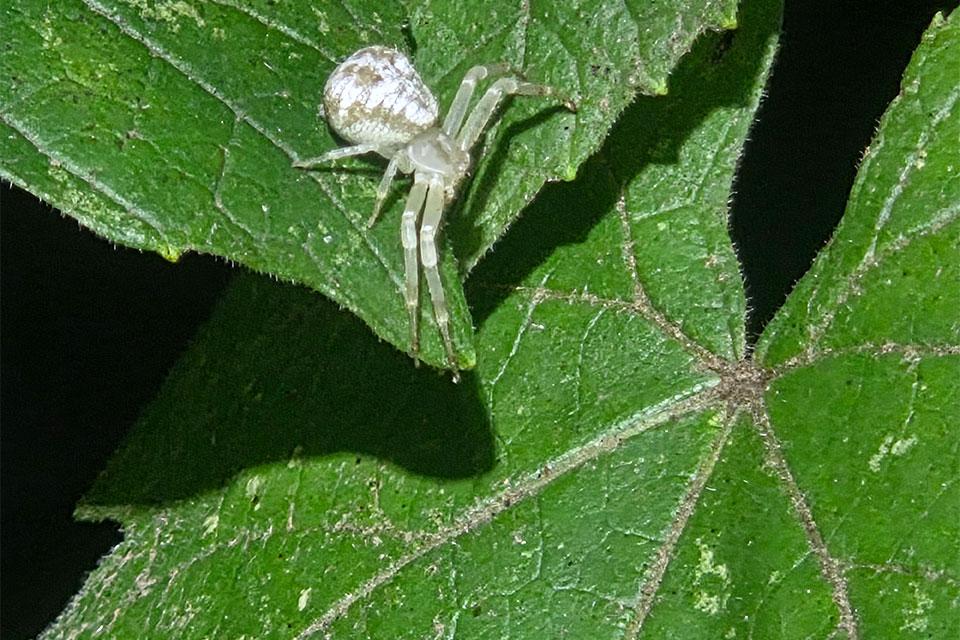
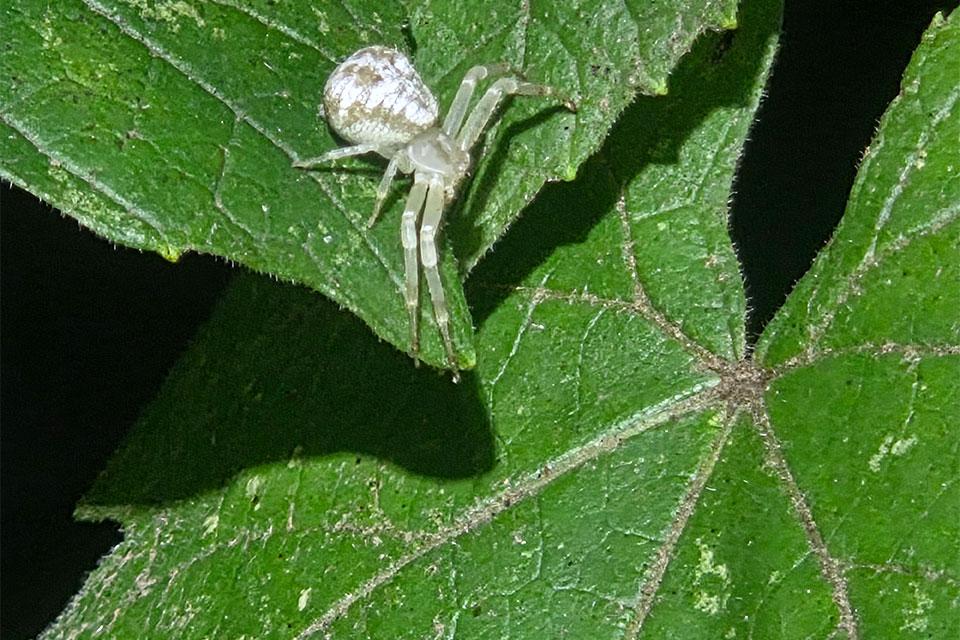
Not all spiders spin webs. Crab spiders hunt, lay in wait, and ambush. A grower’s friend.
Photo by Sandy Dwyer
The key is to identify insects before going to war with them. Many of the best helpers are already here.
The Good Snakes
Perhaps the most misunderstood creatures on my farm are snakes. They scare people, but they’re mostly good guys.
My favorite is the spotted king snake. They love to eat mice and rats, and they’ll even eat copperheads. I relocate the occasional copperhead because I don’t want anyone bitten, but otherwise, snakes are invaluable partners.
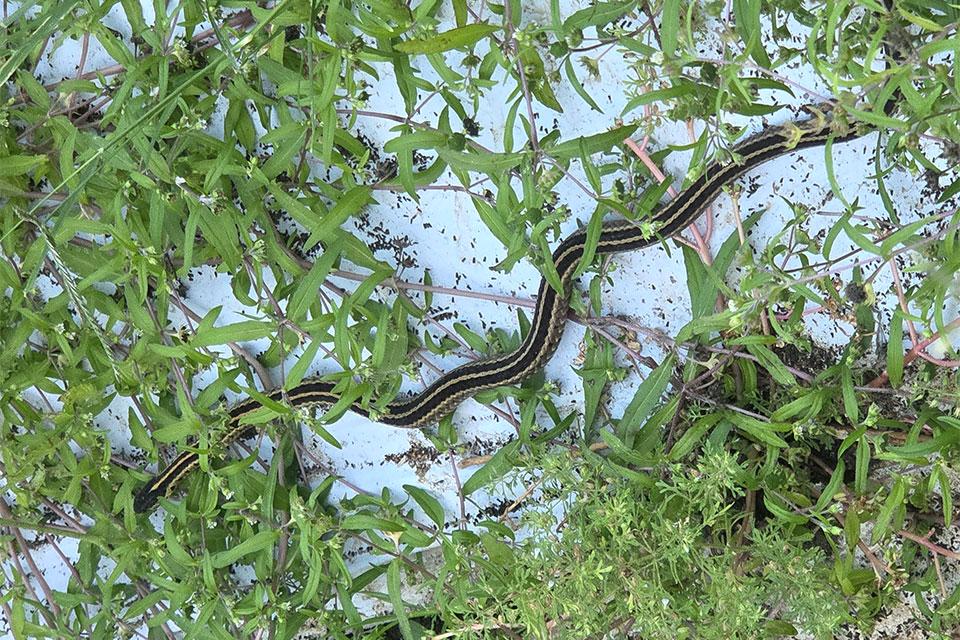
These snakes quietly take care of small insects as well as mice. Several patrol the high tunnel.
Photo by Sandy Dwyer
I understood the basics of beneficial insects and natural predators, but it wasn’t until I began using tunnels that I truly saw how interconnected they were. By preserving their habitat close by, they help grow my food. Financially, they increase my yield and my bank account. I don’t have to clear land, mow constantly, or buy many insecticides. A win-win for all of us.
Keeping Track to Improve
To know whether all this works, I keep records. I map the tunnel, recording what I plant, when, and where. I log every fertilizer and harvest.
For my main salad tomato — the one that won a Blue Ribbon at the State Fair — I harvested 174 pounds from 20 plants, averaging 8.95 pounds per plant. I compare year to year; this season I’m ahead and still harvesting into October.
But overall, nature plays a crucial role. Nature is always present, always teaching. When I’m tired, I sit, listen, and watch the life around the farm.
My conclusion is simple: Tunnels are a wonderful way to grow many of our food crops almost anywhere, by almost anyone. And it’s fun.